
Most runners don’t have an effort problem. They have a restraint problem. They say they want aerobic endurance, better fat oxidation, more speed late in races, and fewer junk miles — then they turn every easy run into a disguised tempo run. This page fixes that.
Use the calculator below to estimate your Zone 2 heart rate with HRmax, HRR/Karvonen, and MAF, then turn that number into a practical easy pace you can actually use on the road, treadmill, or trail.
Zone 2 Running Calculator
Here’s the rule: if you can’t use it during a real run, it’s theory, not leverage. This calculator turns abstract training talk into a number you can actually train by.
Editorial note: this estimate blends the most practical field formulas for runners, but wrist-based heart rate and generic max-HR equations can still miss. Cross-check your number with the talk test, your recent easy-run data, and our review methodology before you lock in training zones.
Your result will appear here
Enter your age and, if possible, your resting heart rate and true max heart rate. The more real inputs you provide, the less fake precision you get.
Tip: pace is a secondary output. Heart rate and conversational effort usually do a better job than pace alone when heat, hills, fatigue, or treadmill calibration get involved.
What Zone 2 running actually is
Zone 2 running is easy aerobic running done below your first major metabolic turn point — often described as below LT1, below the aerobic threshold, or at a pace where you can still hold a comfortable conversation. In practice, it is the intensity that lets you accumulate meaningful volume while keeping fatigue under control.
That sounds basic. It is. That’s why it works.
Zone 2 is where a huge portion of endurance progress gets built: aerobic base, mitochondrial density, capillary development, movement economy at easier efforts, and the ability to recover well enough to actually nail your hard sessions later in the week. It is not glamorous. It is profitable.
Aerobic base
Zone 2 develops the engine that makes every faster pace feel less expensive. Better base = more work with less strain.
Fat oxidation
This is the zone many runners associate with improved fat-burning efficiency. That matters most for long-duration training and pacing control.
Recovery economics
Easy enough to recover from. Hard enough to matter. That is why it is the backbone of sustainable endurance training.
How Zone 2 should feel
- You can speak in full sentences without gasping.
- Your breathing is controlled, not dramatic.
- You finish feeling like you could keep going.
- Your stride stays relaxed instead of forced.
- The session builds confidence instead of stealing tomorrow’s legs.
If you want the broader training context, GearUpToFit’s heart rate training for runners guide gives you the bigger picture on how easy runs, threshold work, and higher-intensity sessions fit together.
HRmax vs HRR vs MAF: which Zone 2 method should you use?
Most runners mess this up by assuming there is one magic formula. There isn’t. There are several useful estimates, and each comes with tradeoffs. The right move is not blind loyalty. The right move is understanding how each method behaves, then choosing the one that best fits your data quality.
| Method | Formula | Best for | Main weakness |
|---|---|---|---|
| HRmax % | Zone 2 ≈ 60–70% of max heart rate | Fast estimate, simple use, broad audience | Depends heavily on max HR accuracy |
| HRR / Karvonen | (Max HR − Resting HR) × 60–70% + Resting HR | Better personalization if you know resting HR | Still depends on accurate max HR |
| MAF | 180 − age as a practical cap reference | Simple conservative starting point | Not individualized enough for everyone |
1) HRmax method
Estimate max HR as 220 − age, or better yet use a known max HR from testing or race data, then take 60% to 70% of that number. Simple, fast, good enough for many runners starting out.
Estimated Max HR = 220 − age Zone 2 = Max HR × 0.60 to 0.70The upside is speed. The downside is obvious: the classic age-based formula can be wrong by a lot for individuals.
2) Heart Rate Reserve (HRR / Karvonen)
Usually a better field estimate because it accounts for how different two runners can be even when they share the same age. Resting heart rate acts as an important anchor.
HRR = Max HR − Resting HR Zone 2 = (HRR × 0.60 to 0.70) + Resting HRIf you know your resting HR and your max HR is realistic, this is often the most practical option for everyday training.
3) MAF method
MAF stands for the Maffetone approach, often simplified as 180 − age. Many runners use this as a ceiling or conservative anchor for low-heart-rate aerobic training.
MAF cap = 180 − ageThe weakness is that it can be too low for some athletes and too high for others. Treat it as a practical reference, not a law of physics.
How to convert Zone 2 heart rate into an easy running pace
Here’s where runners get trapped: they want one fixed pace for Zone 2. Real life does not care. Your Zone 2 pace changes with temperature, humidity, sleep, fueling, terrain, stress, altitude, and how much damage yesterday’s workout did. Treat pace as a useful output of the effort you’re targeting.
Use this hierarchy
- Heart rate tells you the internal cost.
- Talk test confirms you’re not kidding yourself.
- Pace becomes the reference number you log and learn from.
What to expect as fitness improves
Over time, your Zone 2 pace should gradually get faster at the same heart rate. That is one of the cleanest real-world signs that your aerobic base is improving.
On flat roads
Your Zone 2 pace may feel slow enough to bruise your ego. Good. Ego has never lowered a marathon split.
On hills or trails
Slow down aggressively. Shorten stride. Hike if needed. Metabolic demand matters, not social appearance.
On treadmills
Use heart rate plus RPE. Treadmill calibration, indoor heat, and stale air can make pace targets misleading.
In heat & humidity
Expect slower paces at the same heart rate. Do not panic. That is physiology, not regression.
A simple pace-conversion rule
If your current “easy” pace consistently pushes you above your Zone 2 ceiling, slow down by 15 to 45 seconds per mile or 10 to 30 seconds per kilometer, then recheck your heart rate after 8 to 12 minutes.
For a deeper breakdown of pacing across easy runs, marathon pace, and intervals, see GearUpToFit’s running pace training guide. For body-composition goals alongside endurance, the protein calculator for fat loss is a strong companion page.
Why Zone 2 matters so much for runners
Zone 2 matters because it solves the two biggest performance bottlenecks for most runners:
- They train too hard too often to recover well.
- They never accumulate enough quality aerobic volume to become durable.
Easy aerobic work is what lets you stack weeks, not just workouts. And stacking weeks is where speed starts looking “natural.”
The benefits most runners actually care about
- Better endurance: you can hold useful efforts longer.
- Improved recovery: hard workouts stop wrecking the rest of your week.
- Stronger fat utilization: helpful for long runs and pacing control.
- Lower injury risk from chronic overreaching.
- More stable pacing late in races: because the engine under the engine is bigger.
How much Zone 2 should you do each week?
| Runner level | Weekly Zone 2 target | Good starting structure |
|---|---|---|
| Beginner | 90–150 minutes | 3 easy sessions of 30–50 minutes |
| Intermediate | 150–240 minutes | 3–5 easy sessions plus one longer run |
| Advanced endurance runner | 240+ minutes | Most weekly volume easy, with 1–2 quality sessions |
For general health, adult physical activity guidelines commonly point to at least 150 minutes of moderate-intensity activity per week, with more volume often useful depending on goals.
7 Zone 2 mistakes that keep runners slow, tired, and confused
1) Running too fast because the pace looks “embarrassing”
Your easy pace is supposed to feel controlled. If your pride can’t handle that, your fitness will pay the bill.
2) Trusting wrist heart rate blindly
Wrist sensors are convenient. They are not always accurate. A chest strap is usually the better tool when you are dialing in zones.
3) Using a fake max heart rate
If you’ve never tested max HR, every downstream zone is a softer guess. A lab test is ideal. A coach-guided field test is often good enough.
4) Ignoring cardiac drift
Heat, dehydration, fatigue, and poor fueling push heart rate up even at steady pace. If drift gets excessive, slow down. Don’t call stubbornness discipline.
5) Treating Zone 2 as the only thing that matters
You still need strides, race-specific work, threshold development, or intervals at the right time.
6) Chasing perfect formulas while ignoring how you feel
If the calculator says you’re in Zone 2 but you can barely talk, the calculator isn’t the final judge.
7) Building volume too quickly
Aerobic training rewards patience. Add too much time too fast and your “smart base phase” turns into shin splints.
Gear that makes Zone 2 easier to execute
You do not need more gear to become a better runner. But a few tools reduce friction and make heart-rate training dramatically easier to follow.
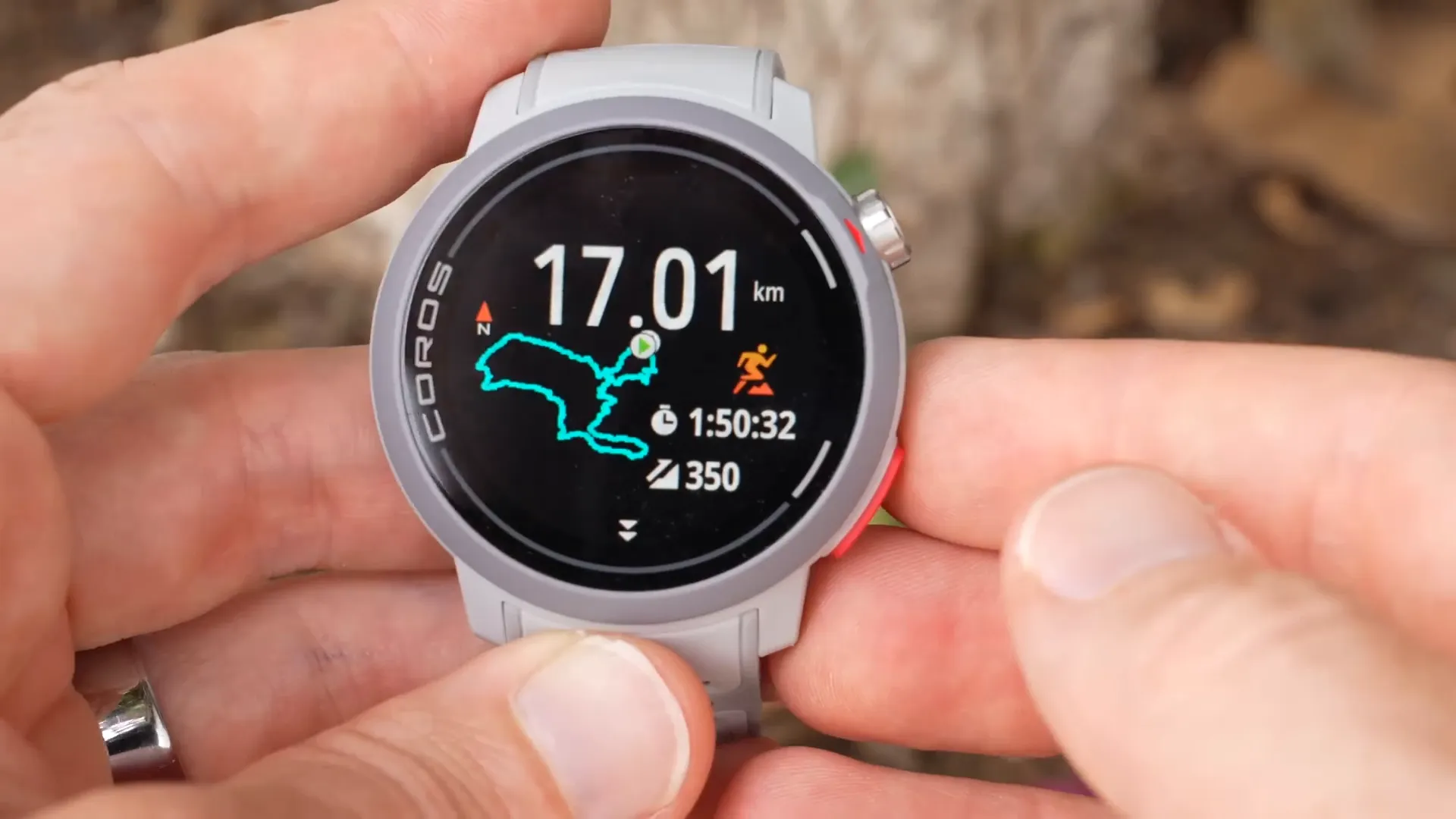
If your goal is to execute Zone 2 consistently, prioritize a watch with reliable GPS, customizable heart-rate alerts, simple workout screens, and battery life that doesn’t become another excuse.
- Clear live bpm display and configurable zone alerts
- Ease of use over flashy menus
- Chest strap compatibility for serious zone accuracy

If you want advanced guidance around training load, recovery, and pacing, a stronger watch ecosystem helps you see how Zone 2 fits into your broader weekly structure.
- Useful for long runs, marathon prep, and fatigue management
- Better dashboards help you spot pace drift and recovery trends
- Most valuable if you actually look at the data
4-week Zone 2 running plan for beginners
You do not need a 47-tab spreadsheet to start. You need a week you can repeat. Then you need the maturity to repeat it.
| Week | Session 1 | Session 2 | Session 3 | Optional |
|---|---|---|---|---|
| Week 1 | 30 min Zone 2 | 35 min Zone 2 | 40 min Zone 2 | 4 × 15 sec strides |
| Week 2 | 35 min Zone 2 | 35 min Zone 2 | 45 min Zone 2 | Easy walk or mobility |
| Week 3 | 35 min Zone 2 | 40 min Zone 2 | 50 min Zone 2 | 4–6 short strides |
| Week 4 | 30 min Zone 2 | 35 min Zone 2 | 45 min Zone 2 | Recovery week |
How to use this plan
- Keep the effort easy enough that you could repeat the run tomorrow.
- If heart rate spikes, slow down or take a short walk break.
- Do not add intervals yet if every run already feels harder than it should.
- Once this feels sustainable, layer in one quality workout per week.
Pair this with the custom running plan guide, the GearUpToFit running hub, and the beginner marathon watch guide.
How to know your Zone 2 is actually working
Most people quit easy aerobic training too early because they expect dramatic change in 10 days. That is not how durable fitness works.
- Your easy pace gets slightly faster at the same heart rate.
- Your breathing feels calmer at paces that used to feel busy.
- Your long runs stop turning into survival events.
- You recover better between quality sessions.
- Your heart rate drifts less on steady easy efforts.
A helpful YouTube video to understand Zone 2 better
Video explainers can lock in what long-form text introduces. Here’s a widely referenced coach’s breakdown of Zone 2 and why it belongs at the core of almost every endurance week:
Replace the embed URL above with your preferred video if licensing changes.
Zone 2 running — Frequently Asked Questions
Is Zone 2 the same for running and cycling?
Not exactly. Your heart rate at a given “easy” effort is typically lower on the bike than running for most athletes, because running recruits more muscle mass and carries impact cost. Use sport-specific zones rather than copying one set across both.
Can I walk during a Zone 2 run?
Absolutely. If your heart rate climbs above your Zone 2 ceiling on hills or when you’re fatigued, walking briefly to bring it back down is smarter than forcing a pace that turns the session into a tempo effort.
How long until I see Zone 2 benefits?
Most runners start noticing calmer breathing and slightly faster pace at the same bpm within 4 to 8 weeks of consistent Zone 2 volume. Bigger structural adaptations — capillary density, mitochondrial efficiency — take months, not days.
Is “220 − age” accurate for max heart rate?
It’s a rough population average. Individual max HR can be 10–20 bpm higher or lower. If you can safely do a coach-supervised field test or a lab test, you’ll get much better zones.
Should beginners only do Zone 2?
For the first 4–8 weeks of a base phase, yes — it keeps injury risk low and builds a platform. After that, adding short strides and, eventually, one quality session per week usually pays off.
What if my heart rate runs high for my age?
Some people naturally have a higher max HR than the age formula predicts. If your “Zone 2” feels absurdly easy using 220 − age, test your actual max HR or use HRR with a verified resting HR.
Does Zone 2 help with weight loss?
It can, because it’s easy enough to do often and increases total weekly energy expenditure without wrecking recovery. But nutrition does the heavier lifting. Pair with the protein calculator for fat loss.
Can I combine Zone 2 with strength training?
Yes — and you probably should. Separate hard strength and hard running by at least 6 hours when possible, and keep Zone 2 days truly easy so your strength sessions don’t suffer.
Methodology
Formulas used by this calculator:
- HRmax estimate: 220 − age, overridden by user-entered max HR when provided.
- HRmax Zone 2: HRmax × 0.60 to HRmax × 0.70.
- HRR / Karvonen Zone 2: ((HRmax − RHR) × 0.60) + RHR to ((HRmax − RHR) × 0.70) + RHR.
- MAF cap: 180 − age; Zone 2 lower bound derived as MAF − 10.
- Suggested easy pace: if a current easy pace is entered and estimated Zone 2 ceiling is below your stated effort, the tool suggests slowing by 15–45 s/mi (10–30 s/km).
This calculator is for educational use. It is not medical advice. If you have cardiovascular concerns or take medications that affect heart rate, consult a qualified physician before training by heart rate.
References & further reading
- American College of Sports Medicine. ACSM’s Guidelines for Exercise Testing and Prescription, 11th ed. — heart rate zones and intensity classification.
- Karvonen MJ, Kentala E, Mustala O. “The effects of training on heart rate.” Ann Med Exp Biol Fenn. 1957;35(3):307–315.
- Maffetone P. The Big Book of Endurance Training and Racing. Skyhorse Publishing, 2010 — the 180-formula.
- Seiler S. “What is best practice for training intensity and duration distribution in endurance athletes?” Int J Sports Physiol Perform. 2010;5(3):276–291.
- U.S. Department of Health and Human Services. Physical Activity Guidelines for Americans, 2nd ed., 2018 — 150-minute moderate-intensity benchmark.
- Tanaka H, Monahan KD, Seals DR. “Age-predicted maximal heart rate revisited.” J Am Coll Cardiol. 2001;37(1):153–156.
