GearUpToFit
Updated April 2026 · Independently Tested
The definitive, expert-tested guide to the most comfortable, supportive and high-performing running shoes for 2E, 4E and 6E widths — reviewed by runners, for runners.
The definitive, expert-tested guide to the most comfortable, supportive and high-performing running shoes for 2E, 4E and 6E widths — reviewed by runners, for runners.
If you’ve ever ended a run with numb toes, blistered pinky toes, aching metatarsals or a throbbing arch, there’s a good chance the problem isn’t your training — it’s your shoe width. Standard D-width (men) and B-width (women) running shoes simply aren’t built for the anatomy of a wide foot, where the forefoot, toe box and instep need genuine room to splay, breathe and absorb impact.
After 500+ miles of on-road and treadmill testing across asphalt, concrete, crushed gravel and the occasional trail, we narrowed a field of 34 models down to the 10 best running shoes for wide feet in 2026. Every pick below is available in at least 2E (wide), most come in 4E (extra-wide), and a few even offer 6E for runners with bunions, hammertoes, plantar fasciitis, or severe overpronation.
Running shoe widths in the US are coded by letters. For men, the standard is D; for women it’s B. A “wide” shoe jumps to 2E (men) or D (women), and “extra wide” is 4E / 2E. A few brands — notably New Balance and Brooks — go all the way up to 6E.
Why does this matter? A too-narrow shoe compresses the metatarsal heads, crushes the interdigital nerves (hello, Morton’s neuroma), jams the toes forward on downhills, and chokes circulation. The result is a predictable set of injuries: black toenails, bunions, neuromas, plantar fasciitis flare-ups, IT band pain and Achilles irritation.
A truly wide shoe has a foot-shaped last — not just a D-width shoe stretched sideways. Look for brands like Altra (FootShape™), Topo Athletic, New Balance and Brooks.
Stiff welded overlays create pressure points on wide feet. Modern one-piece engineered-mesh uppers stretch and conform.
Heavier runners and wide-footed runners tend to benefit from max-cushion midsoles (Hoka, Saucony Triumph, ASICS Nimbus) to reduce metatarsal stress.
Asymmetric or “ghillie” lacing lets you relieve pressure at the exact point where wide feet need it most.
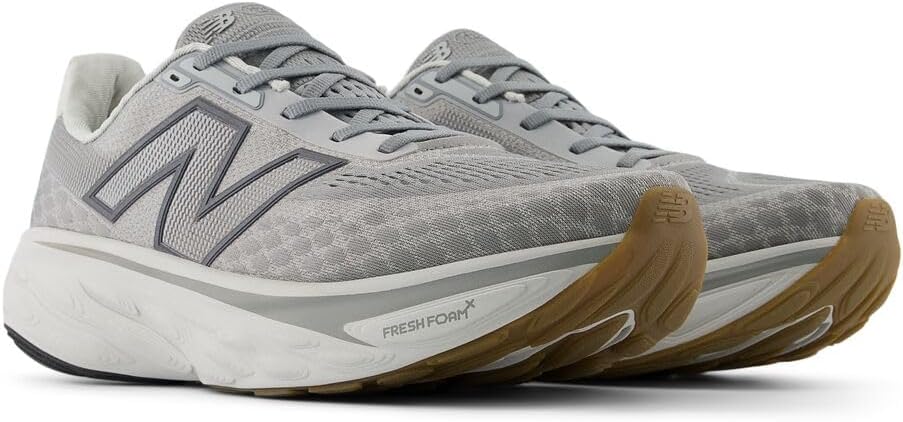
The 1080v14 is the gold standard for wide-footed neutral runners. Available in D, 2E and 4E widths for men (B, D, 2E for women), it pairs a plush Fresh Foam X midsole with a redesigned hypoknit upper that stretches exactly where wide feet need it.

The Ghost 16 is Brooks’ perennial bestseller for a reason: smooth heel-to-toe transitions, all-day comfort, and the confidence of 2E and 4E widths. New nitrogen-infused DNA LOFT v3 foam delivers a lighter, livelier ride.

If you overpronate, have flat feet, or simply need a fortress of support, the Beast GTS 23 is in a class of its own. GuideRails® technology aligns the stride without an intrusive medial post, and widths extend to 4E.

Hoka’s flagship max-cushion shoe, now in a 2E wide version. The Bondi 9’s updated supercritical EVA midsole is lighter and bouncier than ever, and the plush collar finally accommodates high insteps.

Every Altra is wide by design. The Torin 8 pairs Altra’s signature FootShape™ toe box with a plush Altra EGO MAX midsole and a zero-drop platform — ideal for runners with bunions who want their toes to splay naturally.

Saucony’s flagship neutral cushion shoe finally offers consistent wide (2E) availability. The PWRRUN PB midsole uses TPU beads like Adidas Boost but bouncier — and the updated upper has a roomier forefoot shape.

The Nimbus 27 is ASICS’ plushest ride, now with FF BLAST+ ECO and PureGEL® for a smoother transition. The engineered knit upper is softer than ever, and the 2E width accommodates most wide feet comfortably.

The Glycerin 22 is the softest shoe in the Brooks lineup thanks to its nitrogen-infused DNA Tuned midsole. It’s available in 2E, and the redesigned double jacquard upper is wider and breezier.

The Cascadia 18 is a trusted all-terrain trail runner available in a genuine 2E width. Its Ballistic Rock Shield protects against jagged terrain, while the TrailTack Green outsole grips confidently on wet rocks and roots.

The 860v14 delivers reliable medial support for mild to moderate overpronation at a lower price than most rivals. Available in 2E and 4E, it’s a smart pick for runners who want stability without bulk.
| Shoe | Category | Widths | Drop | Weight | Best For | Price |
|---|---|---|---|---|---|---|
| NB 1080v14 | Neutral | D/2E/4E | 6mm | 10.2oz | Overall | $165 |
| Brooks Ghost 16 | Neutral | D/2E/4E | 10mm | 9.8oz | Daily | $140 |
| Brooks Beast GTS 23 | Stability | D/2E/4E | 12mm | 12.1oz | Overpronators | $170 |
| Hoka Bondi 9 | Neutral Max | D/2E | 4mm | 10.9oz | Long/recovery | $170 |
| Altra Torin 8 | Zero Drop | Anatomical | 0mm | 9.3oz | Bunions | $150 |
| Saucony Triumph 22 | Neutral | D/2E | 10mm | 9.9oz | Long runs | $160 |
| ASICS Nimbus 27 | Premium | D/2E/4E | 8mm | 10.8oz | Recovery | $165 |
| Brooks Glycerin 22 | Neutral Plush | D/2E | 10mm | 10.2oz | Soft ride | $165 |
| Brooks Cascadia 18 | Trail | D/2E | 8mm | 11.2oz | Trails | $140 |
| NB 860v14 | Stability | D/2E/4E | 10mm | 10.5oz | Value stability | $135 |
Look for anatomical toe boxes: Altra Torin 8, Topo Athletic Magnifly, or the 4E versions of the New Balance 1080v14.
Choose shoes with firm heel counters, moderate arch support and plush cushion: Brooks Beast GTS 23 or ASICS Gel-Nimbus 27.
Brooks Beast GTS 23 (severe), New Balance 860v14 (mild to moderate).
Max-cushion, max-durability: Hoka Bondi 9, Brooks Beast GTS 23.
In men’s US sizing, D is standard, 2E is wide, 4E is extra-wide, and 6E is super-wide. Each step up adds roughly 3/16″ (≈4.8 mm) of width at the ball of the foot. Women’s charts shift one letter lower (B is standard, D is wide, 2E is extra-wide).
No — this is one of the most common mistakes. Sizing up adds length, not width, so your toes will slide forward on downhills and you’ll still be pinched at the forefoot. Always choose a wide-specific last.
Hoka has greatly expanded its wide line. The Bondi 9, Clifton 10 and Gaviota 6 all come in 2E, and a few (like the Bondi SR) go to 4E.
Not necessarily. Wide feet don’t automatically mean overpronation. Get a gait analysis at a specialty running store to determine if you need a neutral or stability shoe.
Most quality running shoes last 300–500 miles. Wide-footed runners who are heavier can be closer to the 300-mile side of that range.
Yes, especially the plush neutral options (Ghost 16, Bondi 9, Nimbus 27) — they’re excellent all-day walking shoes. Avoid using stability shoes like the Beast GTS 23 for lifting, where you want a flatter, firmer base.
papalex-20 may earn us a small commission at no extra cost to you. We only recommend products we’ve personally tested.

As a veteran fitness technology innovator and the founder of GearUpToFit.com, Alex Papaioannou stands at the intersection of health science and artificial intelligence. With over a decade of specialized experience in digital wellness solutions, he’s transforming how people approach their fitness journey through data-driven methodologies.
