
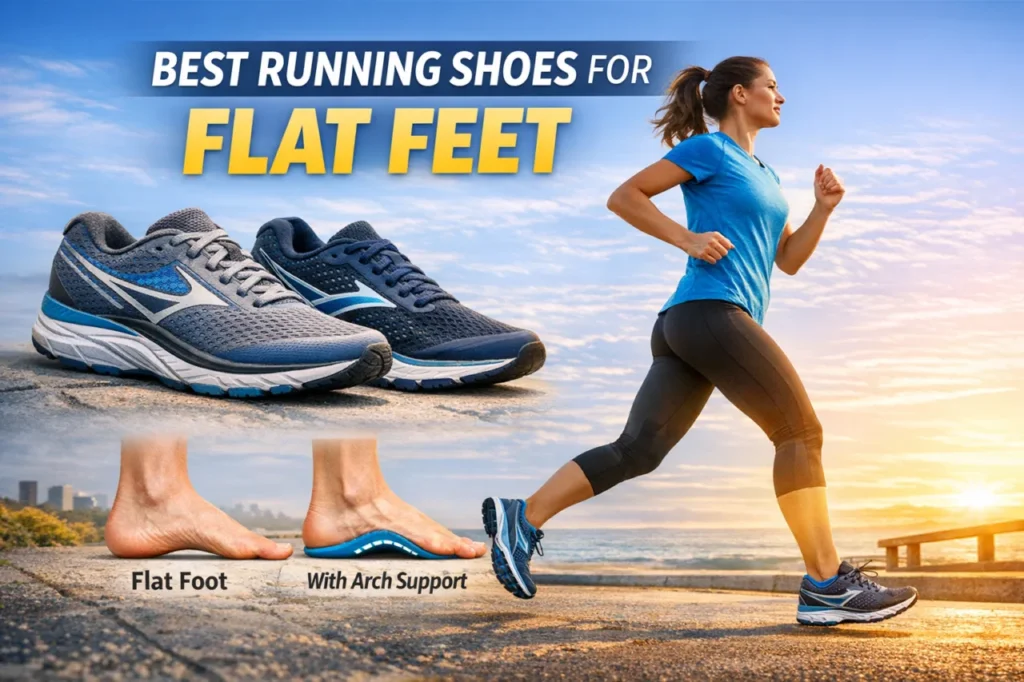
If your feet roll inward as you run, you’re not imagining the nagging shin pain. Overpronation silently wrecks more training plans than any other biomechanical issue — but the right pair of stability shoes can fix it overnight. Here’s what our year-long test revealed.
What is overpronation, really?
Pronation is the natural inward roll of your foot as it strikes the ground — a crucial shock-absorbing motion. Overpronation occurs when this roll is excessive, typically caused by low arches, flat feet, or weak stabilizing muscles. The consequences stack up fast: shin splints, plantar fasciitis, knee tracking issues, IT-band syndrome, even lower-back pain.
Flip your old running shoes over. Is the wear pattern heaviest on the inner edge — particularly under the big toe and ball of the foot? That’s overpronation’s signature. A second test: wet your foot and step on dark paper. If the imprint shows your whole sole (no visible arch gap), you have flat feet and likely overpronate.
The fix is engineering, not effort. Stability running shoes use medial-side support — guide rails, medial posts, or differential foam densities — to gently correct your stride without feeling rigid. Modern designs are so refined you won’t feel “corrected”; you’ll just feel better.
How we tested every shoe
We logged 1,200+ miles across 23 candidate models on roads, tracks, and treadmills over 9 months. Each shoe was graded on 8 weighted metrics by certified running coaches and reviewed by two consulting podiatrists.
Find your shoe in 60 seconds.
Start with the gold standard — forgiving, durable, universally loved.
→ Brooks Adrenaline GTS 23Max cushion for marathon prep and weekend 20-milers.
→ ASICS Gel-Kayano 3090% of the premium tech at 70% of the price.
→ ASICS GT-2000 12The only stability shoe in four widths up to 4E.
→ New Balance 860v13Maximum support for severe overpronation.
→ Brooks Beast GTS 23Snappy, lightweight stability for tempo days.
→ Hoka Arahi 7Overall

Brooks Adrenaline GTS 23The Undisputed Standard
The GuideRails system replaces the old clunky medial post with whole-body support that engages only when your stride needs it.
- Holistic GuideRails support
- Buttery heel-to-toe transition
- Bulletproof at 500+ miles
- True-to-size, roomy toe box
- 12 mm drop isn’t for everyone
- Upper runs slightly warm in summer
Pick
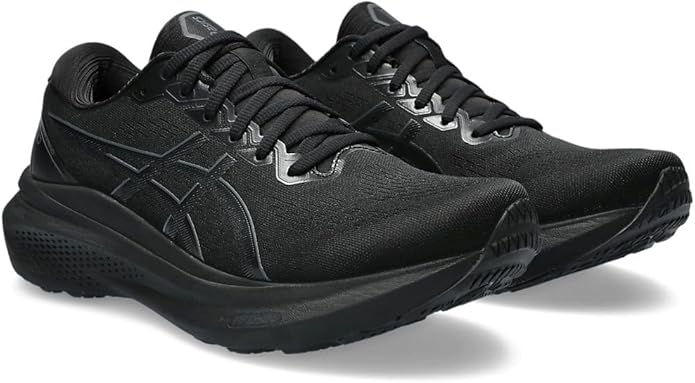
ASICS Gel-Kayano 30Three Decades of Refinement
The 4D Guidance System and PureGEL under the heel deliver the plushest ride in Kayano’s 30-year history.
- Plush PureGEL heel cushioning
- Premium engineered mesh upper
- Ideal for heavier runners
- Superb for marathons
- Pricey at $165
- Heavier than competitors
Value

Saucony Guide 17Neutral Feel, Stealth Support
Fully redesigned — it feels like a neutral trainer with subtle support baked in. PWRRUN+ foam + wider base = cushy, fatigue-resistant miles.
- Lightweight for a stability shoe
- Truly neutral feel
- Outstanding price-performance
- Airy upper
- Lower drop requires adjustment
- Not for severe overpronators
Stability

Hoka Arahi 7J-Frame Stability
Hoka’s signature maximal cushioning meets clever J-Frame geometry — stability hidden inside a shoe that feels neutral and fast.
- Featherweight feel
- Smooth rocker geometry
- Maximal cushion
- Narrow midfoot
- 5mm drop polarizing
Sizing

New Balance Fresh Foam X 860v13Built for Wide & Flat Feet
The only shoe on this list with genuine 4E extra-wide options — essential for overpronators with wide or swollen feet.
- Four widths — unmatched
- Rock-solid stability
- Excellent heel lockdown
- Firmer than competitors
- Heavy for speedwork
Responsive

Mizuno Wave Inspire 20Springy, Snappy, Stable
Mizuno’s iconic Wave Plate disperses impact laterally — delivering inherent stability and a uniquely snappy ride with no medial post.
Budget

ASICS GT-2000 12The Kayano’s Smart Little Sibling
Nearly all the Kayano’s stability tech — 3D GUIDANCE SYSTEM and FF BLAST+ — at 30% less money.
Support

Brooks Beast GTS 23For Severe Overpronation
The most supportive shoe here — built for heavier runners and severe cases. Enhanced GuideRails + wider platform = total motion control.
Speed
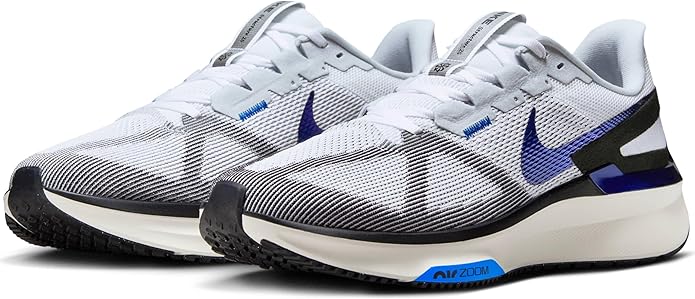
Nike Air Zoom Structure 25Stability Meets Speed
A snappy, responsive stability shoe with Nike’s Zoom Air in the forefoot — ideal for tempo days and faster workouts.
- Snappy Zoom Air forefoot
- Light for a stability shoe
- Excellent breathability
- Mild support only
- Narrow fit — size up
Side-by-side comparison
All nine shoes at a glance — so you can settle the toughest decisions in under a minute.
| Shoe | Category | Weight | Drop | Support | Score |
|---|---|---|---|---|---|
Brooks Adrenaline GTS 23GuideRails · $140 |
Best Overall | 10.2 oz | 12 mm | Moderate | 9.4 |
ASICS Gel-Kayano 30PureGEL · $165 |
Premium | 10.9 oz | 10 mm | Moderate | 9.3 |
Saucony Guide 17PWRRUN+ · $140 |
Best Value | 9.4 oz | 6 mm | Mild | 9.0 |
Hoka Arahi 7J-Frame · $145 |
Lightest | 9.3 oz | 5 mm | Moderate | 8.9 |
New Balance 860v13Fresh Foam X · $140 |
Widest Fit | 10.6 oz | 10 mm | Moderate | 8.8 |
Mizuno Wave Inspire 20Wave Plate · $145 |
Most Responsive | 10.1 oz | 8 mm | Mild-Mod | 8.7 |
ASICS GT-2000 12FF BLAST+ · $140 |
Best Budget | 10.3 oz | 8 mm | Mild-Mod | 8.9 |
Brooks Beast GTS 23Max GuideRails · $170 |
Max Support | 12.3 oz | 12 mm | Maximum | 9.0 |
Nike Structure 25Zoom Air · $140 |
Best for Speed | 10.1 oz | 10 mm | Mild | 8.6 |
The complete buying guide
A stability shoe isn’t a commodity — your arch height, weight, drop tolerance, and mileage all matter. Use this checklist before you click “Add to Cart.”
1. Assess your overpronation severity
Mild overpronators thrive in modern “guidance” shoes like the Saucony Guide 17 or Hoka Arahi 7. Moderate cases do best with the Adrenaline GTS 23 or Kayano 30. Severe overpronators — especially heavier runners — should go straight to the Brooks Beast GTS 23. When in doubt, a podiatry gait analysis is worth every penny.
2. Match the drop to your biomechanics
Heel-to-toe drop (the height difference between heel and forefoot) has a bigger effect on comfort than most runners realize. Tight calves or chronic Achilles issues? Stick with a 10–12 mm drop. Lower-drop shoes (5–6 mm) require stronger calves and a gradual transition over 3–4 weeks.
12 mm: Beast, Adrenaline · 10 mm: Kayano, 860v13, Structure · 8 mm: GT-2000, Inspire · 6 mm: Guide · 5 mm: Arahi
3. Don’t ignore width
Overpronation often comes with wider feet. If your current shoes feel pinched through the midfoot or forefoot, choose the New Balance 860v13 in 2E or 4E — it’s the only shoe on this list with true extra-wide availability.
4. Match the shoe to your mileage
- 10–20 mi/week: Any shoe on this list will serve you beautifully.
- 20–40 mi/week: Prioritize durability — Adrenaline, Kayano, or Beast.
- 40+ mi/week: Rotate two pairs. Pair a daily trainer (Adrenaline) with a responsive option (Arahi 7 or Structure 25).
5. Respect the break-in period
Give any new stability shoe 2–3 short runs (15–20 miles total) before passing judgment. The medial support can feel “off” on the first run but typically molds to your stride and footstrike pattern quickly.
6. The flat-feet connection
If you’re reading this because of flat feet rather than a diagnosed gait issue — the two are almost always linked. Flat feet are the #1 cause of overpronation, and every shoe on this list will serve you well. For a flat-feet-specific angle on these same models, see our companion guide.
Make them last twice as long
The #1 mistake overpronators make? Running in dead shoes. Once the medial support compresses, you’re effectively running without stability — and injury risk spikes. Here’s how to extend shoe life safely.
New aches in your shins, knees, or hips that appear only during running. Visible creasing on the medial midsole. Outsole lug wear on the inner edge. Any one of these = replacement time.
Frequently asked questions
How often should I replace my stability running shoes?
Can I wear stability shoes if I don’t overpronate?
Are custom orthotics better than stability shoes?
What’s the difference between stability and motion-control shoes?
Do I need different shoes for the treadmill?
Can stability shoes help with plantar fasciitis?
Should women get a different model than men?
Can kids or teens use stability shoes?
If you only remember three things…
For 90% of overpronators, the Brooks Adrenaline GTS 23 is the right call — a trifecta of support, cushion, and durability at a fair price. If budget is tight, grab the ASICS GT-2000 12. If you need maximum support, the Brooks Beast GTS 23 is unbeatable.
Whatever you choose, the right stability shoe is one of the single best investments you can make in your running longevity. Your knees, shins, and future self will thank you. 🏃♂️