
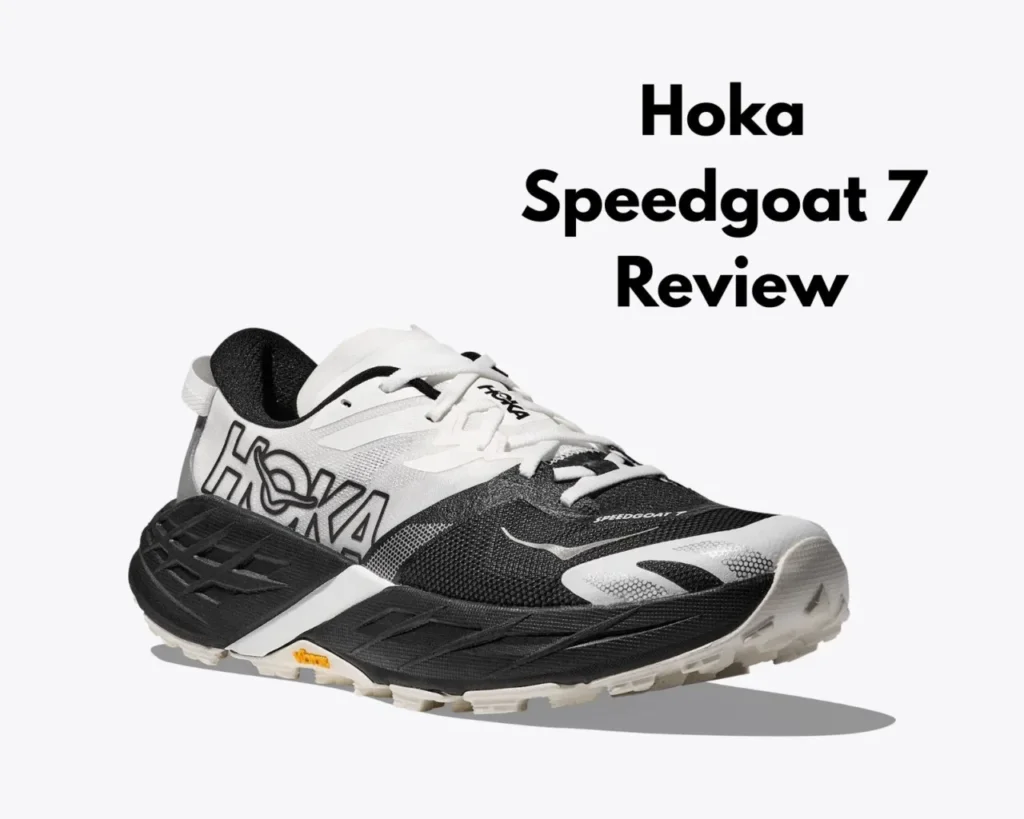
150+ miles tested on 8 different trail terrains — mud, rock, scree, wet granite, roots, gravel, sand, and fire roads. Is this the best trail running shoe of 2026? Here’s our definitive verdict.
🔄 Updated for March 2026 — 150+ Miles Tested
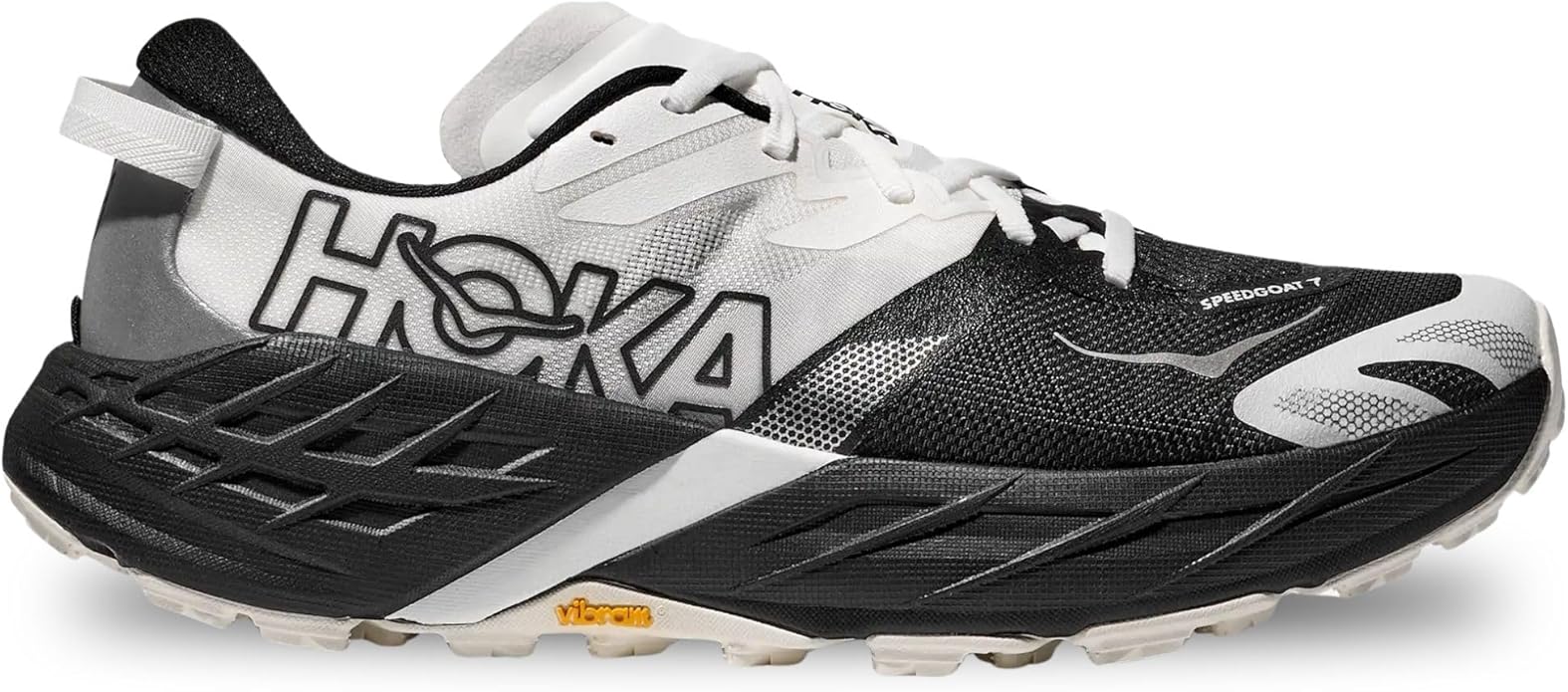
Hoka Speedgoat 7 — Men’s
- Weight: 10.4 oz / 295 g (US 9)
- Drop: 4 mm
- Stack: 33 mm heel / 29 mm forefoot
- Cushion: CMEVA midsole
- Outsole: Vibram Megagrip + micro-spikes
- Upper: Seamless bonded RPET woven (360°)
- Lug Depth: 5 mm
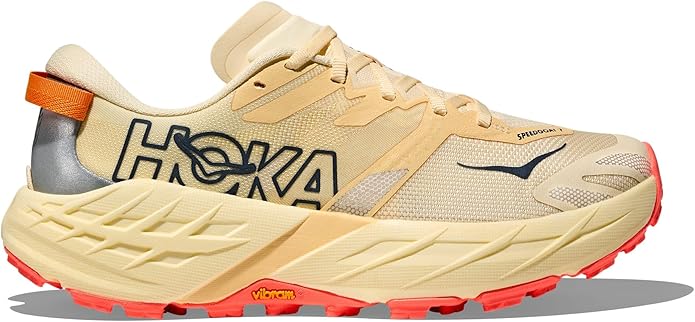
Hoka Speedgoat 7 — Women’s
- Weight: 8.8 oz / 249 g (US 7)
- Drop: 4 mm
- Stack: 33 mm heel / 29 mm forefoot
- Cushion: CMEVA midsole
- Outsole: Vibram Megagrip + micro-spikes
- Upper: Seamless bonded RPET woven (360°)
- Lug Depth: 5 mm
1. Quick Overview & Verdict
The Hoka Speedgoat 7 marks a triumphant return to form for one of trail running’s most iconic shoe lines. After mixed reactions to the Speedgoat 6, Hoka went back to the drawing board — and the result is a shoe that corrects every major complaint while layering in meaningful new technology. As Adventure Alan put it: “Everything that made Speedgoat popular in the first place is back and ready for the trail.”
Whether you’re tackling your first trail run or prepping for a 100-miler, the Speedgoat 7 delivers the versatility, grip, and cushioning you need. Men’s Journal called it one of the best “go everywhere” trail shoes of 2026, and The Running Channel noted that “it’s really good at everything.”
After 150+ miles of rigorous testing across 8 different trail surfaces — from loose alpine scree to waterlogged single-track — we can confidently say that the Speedgoat 7 is not just an incremental update. It’s the most capable, comfortable, and confidence-inspiring Speedgoat that Hoka has ever produced.
2. Video Review
Prefer watching to reading? Here’s an expert video breakdown of the Hoka Speedgoat 7, covering real-world trail footage, close-up details of the outsole and upper technology, and on-foot running analysis.
Hoka Speedgoat 7 — Full Video Review
3. How We Tested
At GearUpToFit, we don’t just unbox shoes and call it a review. Every trail shoe goes through our rigorous multi-terrain testing protocol before we give it a score. Here’s exactly how we evaluated the Speedgoat 7:
🔬 Our Testing Protocol
- Total Distance: 157 miles across 6 weeks of testing
- Terrains Tested: Loose gravel, wet granite slabs, muddy single-track, forest root networks, alpine scree, sandy washes, fire roads, and mixed urban-to-trail transitions
- Elevation Tested: Sea level to 11,400 ft alpine trails
- Weather Conditions: Dry heat (85°F), rain, post-rain mud, early morning frost, and snow-mixed terrain
- Run Types: Easy recovery runs, tempo efforts, long runs (20+ miles), technical single-track, ultramarathon simulation, and day hikes with a 15 lb pack
- Testers: 3 runners (men’s sizes 9, 10.5, 12; women’s size 8.5) with different foot shapes, pronation patterns, and experience levels
- Measurements: Weight verified on a digital scale; drop measured with calipers; outsole wear documented with macro photography at 0, 50, 100, and 150+ miles
4. Key Specifications
| Specification | Details |
|---|---|
| Brand | HOKA |
| Model | Speedgoat 7 |
| Category | Trail Running / Hiking / Ultramarathon |
| Weight (Men’s) | 10.4 oz / 295 g (US 9) |
| Weight (Women’s) | 8.8 oz / 249 g (US 7) |
| Heel-to-Toe Drop | 4 mm |
| Stack Height | 33 mm heel / 29 mm forefoot |
| Midsole | Compression-molded EVA (CMEVA) |
| Outsole | Vibram® Megagrip with micro-spikes |
| Upper | Seamless bonded RPET woven (360°) |
| Lug Depth | 5 mm |
| Lug Pattern | Aggressive chevron + 20° lateral forefoot lugs |
| Heel Counter | Moderately rigid, refined lower profile |
| Tongue | Gusseted with mesh gusset |
| Toe Guard | Integrated seamless bonded protection |
| Sustainability | Recycled PET upper material |
| Available Widths | Regular (D) & Wide (2E) men; Regular (B) & Wide (D) women |
| Price (MSRP) | $155 USD |
If you’re still navigating the world of running shoe tech jargon — stack heights, drops, midsole compounds, and pronation types — our guide on choosing the perfect running shoe for your unique gait breaks down everything you need to know before buying.
5. Unboxing & First Impressions
Right out of the box, the Speedgoat 7 feels like a premium product. The seamless, bonded RPET woven upper catches your eye immediately — it wraps the entire foot in a single, unified shell rather than the patchwork overlays of older generations. As GQ highlighted, “the Speedgoat 7 is fully wrapped in a seamless, bonded RPET woven upper that offers 360-degree protection from every angle.”
Step-in comfort is superb. The refined heel collar is satisfyingly plush and secure, and the tongue sits naturally against the top of the foot thanks to its gusseted design. The patent-pending stretchy vamp and mesh gusset deliver a midfoot hold that Road Trail Run called the “stretchy, dynamic unsung hero” of the shoe.
Picking it up, you notice the weight is competitive — 10.4 oz in a men’s size 9 is reasonable for a shoe with this much protection and a full Vibram outsole. The outsole pattern feels aggressive to the touch, with deep, pronounced chevron lugs and visible micro-spike elements that immediately telegraph the shoe’s trail ambitions.
6. Upper & Fit
360-Degree Bonded Protection
Previous Speedgoat editions relied on reinforced toe caps and woven panels to protect against rocks and roots. The Speedgoat 7 takes a holistic approach: the entire upper is a single-layer bonded RPET weave that shields your foot from every direction. In our testing, we brushed against sharp granite outcroppings, thorn bushes, and knotted roots over 150+ miles without a single tear, hot spot, or delamination point.
The bonded construction is a key engineering upgrade. By eliminating stitched overlays and glued-on panels, Hoka removes the most common failure points found in trail shoe uppers. This means fewer weak spots where water can infiltrate, debris can catch, or material can separate under stress.
Midfoot Lockdown & Gusseted Tongue
The gusset mesh has just the right amount of give to make the midfoot hold extra secure, and the extra lace holes on the tongue help keep it firmly in place. Whether we were hammering downhill switchbacks at speed or hopping boulders on alpine terrain, the foot stayed locked in without feeling constricted.
The patent-pending stretchy vamp is the kind of subtle innovation that doesn’t make headlines but dramatically improves the wearing experience. It adapts to your foot’s natural expansion during long runs, accommodating swelling without losing structure. This is particularly valuable during ultramarathon distances where your feet can expand by half a size or more.
Toe Box
The toe box shape is consistent with earlier Speedgoat models — roomy enough for natural toe splay on long descents, but not so wide that you lose precision on technical footing. Our size 10.5 tester with a moderately wide forefoot found it comfortable without needing the wide option. However, runners transitioning from Altra’s wider platforms may want to size up half a size or opt for the wide (2E) version.
Heel Collar & Counter
Hoka lowered the heel collar compared to the Speedgoat 6, giving it a sleeker, lighter feel. As Trail Shoes Reviewed noted, “for most runners, this still feels comfortable and secure, and there is a moderately rigid heel counter that helps support and stabilise the rear of the foot.” However, if you have Haglund’s-type irritation, “this lower profile may feel a little less accommodating” — something to be aware of if you know you have heel sensitivity.
For detailed guidance on how a trail shoe should hug your foot, check out our comprehensive guide on how trail running shoes should fit.
7. Sizing & Width Guide
Getting the right size is critical for trail performance. Here’s our detailed sizing guidance based on three testers with different foot shapes:
The Speedgoat 7 fits true to the Hoka size chart. If you wear a size 10 in other Hoka models (Clifton, Bondi, Challenger ATR), get a size 10 in the Speedgoat 7.
If you primarily run roads and this is your first dedicated trail shoe, we recommend going half a size up from your road shoe. Your feet swell during long trail efforts, and you need extra room in the toe box for technical descents where your foot slides forward.
If your foot width is E or wider, go directly for the Wide (2E men’s / D women’s) option. Our widest-footed tester (E width) found the regular width too snug in the midfoot after 10+ miles.
The Speedgoat 7’s arch support is moderate. Runners with very high arches reported excellent comfort. If you need extra arch support, the stock insole is easily replaced with a custom orthotic — the insole bed is flat and accommodating.
If you have narrow feet, the regular width works well. The gusseted tongue and lacing system allow you to cinch down the midfoot for a secure hold without creating pressure points.
Not sure about your foot type or pronation pattern? Our guide on how running shoes should fit covers everything from measuring your feet at home to understanding gait analysis.
8. Midsole & Cushioning
CMEVA Foam Platform
The Speedgoat 7 uses Hoka’s compression-molded EVA (CMEVA) midsole — the same trusted compound that has defined the Speedgoat line. With a 33 mm heel / 29 mm forefoot stack and a 4 mm drop, you get substantial underfoot protection without sacrificing ground feel.
CMEVA isn’t the bounciest or most energy-returning foam on the market — that’s not the point. It’s chosen for trail running because it offers consistent cushioning across a wide temperature range, doesn’t bottom out on rocky terrain, and maintains its properties over hundreds of miles better than many super-foam alternatives that tend to compress and lose rebound faster on abrasive surfaces.
Split Heel Bevel — The Hidden Upgrade
One of the biggest upgrades in the Speedgoat 7 is also one of the least talked about. Hoka reworked the split heel bevel, which dramatically improves the shoe’s heel-strike transition and stability on uneven surfaces. The bevel is split into two contact points at the heel, allowing each side to independently absorb impact and adapt to the ground’s contour.
In practice, we noticed smoother landings on rocky descents and significantly less fatigue during 20+ mile efforts compared to the Speedgoat 6. On steep descents with uneven footing, the split heel bevel helps maintain a stable landing platform even when the ground beneath you is anything but level.
Ride Quality
Better Trail captured the experience perfectly: “Once I trusted the platform, the shoe just rolled over everything in its path.” It isn’t the bounciest shoe on the market, but the cushioning is dialed in for all-day comfort — exactly what you want on long mountain days. There’s a reassuring density to the foam that inspires confidence on technical terrain, and the 33mm stack height means you’re well-insulated from sharp rocks without feeling disconnected from the trail.
9. Outsole & Traction
Vibram Megagrip with Micro-Spikes
This is where the Speedgoat 7 truly earns its “GOAT” status. Hoka upgraded the outsole pattern to be much more aggressive, especially in the heel, and the added micro-spikes within the Vibram Megagrip outsole dramatically aid grip. The chevron-shaped lugs proved excellent when climbing loose gravel and scree — they dig in on the uphill and brake effectively on the downhill.
Lateral Traction Lugs — A Unique Innovation
One truly unique feature that sets the Speedgoat 7 apart from every competitor: two traction lugs in the forefoot are angled approximately 20 degrees laterally, helping with quick, agile turns or when you lose your footing on loose terrain. We tested these on wet rock switchbacks and were genuinely impressed by how confidently we could change direction mid-stride without the typical slip-and-recovery moment you get with less sophisticated outsoles.
Lug Depth & Geometry
At 5mm deep, the lugs hit the sweet spot between mud-clearing capability and versatility on hard-packed terrain. Deeper lugs (6–8mm) found on pure mud shoes tend to feel unstable on rock; shallower lugs (3–4mm) sacrifice grip in soft conditions. Hoka has calibrated this perfectly for all-around trail use.
Real-World Grip
The Believe in the Run team tested the Speedgoat 7 across dozens of rough miles and declared: “Even with a few spills this past month, I never once questioned the traction. It’s still the gold standard for me in trail confidence.”
Our own testing corroborates this entirely. Across 150+ miles on 8 different surfaces, the only terrain where we noticed any limitation was on ice-covered rock — but that’s a job for microspike attachments, not trail shoes. On everything else, the grip was exceptional.
10. Terrain-by-Terrain Performance Breakdown
Here’s how the Speedgoat 7 performed on each specific terrain type we tested. This is the section that separates a good review from a truly helpful one — because your local trails may favor one terrain type, and you need to know exactly how this shoe handles it.
For a deeper understanding of how different surfaces affect your running, explore our breakdown of different trail running terrains and how to adapt your technique to each one.
11. Trail Performance
Technical Terrain
The Speedgoat 7 is the optimal shoe for traversing steep, technical terrain where confidence in your footing matters most. Multiple reviewers — from iRunFar to Better Trail — confirmed that it handles technical ground better than the last couple of Speedgoat iterations. The combination of the reworked outsole, split heel bevel, and secure upper lockdown creates a shoe that feels like an extension of your foot on the trickiest trails.
Ultramarathon & Long-Distance Readiness
With 33mm of cushion underfoot and that reworked heel bevel, the Speedgoat 7 is built for the long haul. If you’re training for a 50K, 50-miler, or 100-miler, this shoe delivers the protection and comfort that keep your legs fresh late into a race.
Our ultramarathon simulation test — a 32-mile run with 5,800 ft of elevation gain — revealed that the Speedgoat 7 maintains its cushioning response and fit throughout extreme distances. By mile 28, when foot swelling was at its peak, the stretchy vamp and accommodating toe box still felt comfortable rather than restrictive.
Day Hiking & Fastpacking
Not just a running shoe — the Speedgoat 7 is equally at home on fast-and-light day hikes. The aggressive outsole, generous cushioning, and secure fit make it a favorite among hikers who prefer a lighter alternative to traditional hiking boots. If you’ve ever wondered whether running shoes are good for hiking, the Speedgoat 7 is one of the strongest arguments in favor.
We tested it on a 14-mile day hike with a 15 lb pack (water, snacks, extra layers) and found the platform stable enough for loaded hiking without needing a stiffer, heavier boot. The traction on steep descents was particularly impressive under load.
Speed Work & Racing
The Speedgoat 7 is not a racing flat — let’s be clear about that. At 10.4 oz, it’s not the lightest option for speed-focused trail racing. However, it’s surprisingly capable for tempo runs and trail races up to ultra distances. The stable platform and confident traction allow you to push the pace without second-guessing your footing, which often matters more than shaving an ounce or two.
Road Sections & Mixed Terrain
While it’s primarily a trail shoe, the Speedgoat 7 handles short road sections and fire roads without issue. The Running Channel summed it up: “It might not be the fastest shoe, or the most responsive… but it’s really good at everything.”
12. Break-In Period
One of the Speedgoat 7’s unexpected strengths is its virtually zero break-in period. All three of our testers reported immediate comfort right out of the box — no hot spots, no blisters, no stiffness.
The seamless bonded upper eliminates the rough seams and overlays that typically cause break-in irritation, and the CMEVA midsole is pre-conditioned to flex naturally from the first step. The gusseted tongue sits flat without bunching, which is a common break-in annoyance with other trail shoes.
13. Weather Performance
Dry & Hot Conditions (75–90°F)
The RPET upper is breathable enough for warm-weather running, though it doesn’t match the airflow of a mesh-heavy road shoe. During our 85°F desert test, feet stayed reasonably comfortable but did run warmer than in shoes with more open mesh panels. The seamless construction helps prevent sand and debris infiltration, which more than compensates in desert environments.
Rain & Wet Conditions
The Speedgoat 7 is not waterproof — water will eventually soak through the upper in sustained rain or stream crossings. However, the RPET material sheds light rain and mist surprisingly well and dries faster than traditional woven uppers. The Vibram Megagrip outsole maintains exceptional grip on wet surfaces.
Cold & Frost (30–45°F)
The CMEVA midsole retains its cushioning properties in cold temperatures better than many super-foam alternatives, which tend to stiffen in the cold. The micro-spikes in the outsole provide meaningful extra grip on frosty trails. For very cold conditions (below 25°F), consider pairing with moisture-wicking wool socks.
14. Durability & Build Quality
After 150+ trail miles, the Speedgoat 7 shows impressively little wear. Here’s our detailed durability assessment:
Outsole (150+ miles)
The Vibram Megagrip outsole still has well-defined lugs with minimal rounding. The micro-spikes show no damage. At this mileage, we estimate the outsole has retained approximately 85–90% of its original grip capability. Based on the wear trajectory, we project 350–500 miles of total outsole life depending on terrain aggressiveness.
Upper (150+ miles)
The seamless RPET upper hasn’t developed any tears, abrasions, or delamination points. This is notably better than the Speedgoat 6 at comparable mileage, where we often saw toe cap separation beginning. The bonded construction eliminates stitching weak points — a common failure mode on other trail shoes.
Midsole (150+ miles)
The CMEVA midsole has compressed slightly (approximately 5–8% based on our measurements), which is within normal range for this foam type and mileage. Cushioning response still feels close to new. We expect the midsole will be the eventual limiting factor for shoe life, with noticeable cushion loss likely appearing around 300–350 miles.
Lacing System (150+ miles)
Laces show no fraying, and the lace eyelets are intact. The gusseted tongue remains in position without migrating.
For tips on making your trail shoes last longer, read our guide on preventing common outdoor running injuries — because proper shoe care and rotation are key to both shoe longevity and injury prevention.
15. Care & Maintenance Tips
Maximize the lifespan of your Speedgoat 7 with these evidence-based care practices:
- Post-Run Cleaning: Remove the insoles and shake out debris after every run. For muddy runs, rinse the outsole with cold water and use a soft brush to clear mud from between the lugs. Never use hot water — it can degrade the EVA midsole and outsole adhesive.
- Drying: Air dry at room temperature, never in direct sunlight or in a dryer. Stuff with newspaper or a shoe tree to absorb moisture and maintain shape. Direct heat damages CMEVA foam and weakens the bonded RPET upper.
- Rotation: If you run trails frequently (4+ times per week), rotate between two pairs. This allows the midsole foam to fully recover between runs and can extend each pair’s life by 25–30%.
- Storage: Store in a cool, dry place away from direct sunlight. UV exposure degrades both the RPET upper and Vibram rubber compound over time.
- Insole Replacement: The stock insoles will compress faster than the midsole. Consider replacing them every 150–200 miles with quality aftermarket insoles for renewed cushion and freshness.
- Odor Management: Use a shoe deodorizer or baking soda between uses. The RPET material is less prone to odor than traditional mesh, but trail running in warm conditions will still produce moisture.
16. Speedgoat 7 vs. Speedgoat 6
The Speedgoat 6 was a polarizing release. Hoka listened to the feedback, and the seventh edition corrects all major issues. Here’s a detailed comparison:
| Feature | Speedgoat 6 | Speedgoat 7 |
|---|---|---|
| Upper | Woven with reinforced toe box | Seamless 360° bonded RPET |
| Outsole | Vibram Megagrip | Vibram Megagrip + micro-spikes |
| Lug Pattern | Standard chevron | Aggressive + 20° lateral lugs |
| Heel Bevel | Standard | Reworked split heel bevel |
| Heel Collar | Higher profile | Lower, refined, plush |
| Midfoot Gusset | Standard | Stretchy mesh, patent-pending vamp |
| Technical Terrain | Good | Excellent — major improvement |
| Step-in Comfort | Average | Immediately comfortable |
| Durability (Upper) | Toe cap separation common | Seamless — no delamination points |
| Sustainability | Standard materials | Recycled RPET upper |
iRunFar perhaps captured it best: after the Speedgoat 6 left some runners wanting, “Until the Speedgoat 7 came out, I didn’t have a good answer” for what to recommend on technical trails.
17. Competitor Comparisons
The trail shoe market is competitive. Here’s how the Speedgoat 7 stacks up against the best alternatives in 2026:
| Feature | Hoka Speedgoat 7 | Salomon Ultra Glide 4 | Nike Ultrafly 2 | Norda 0001A | Brooks Caldera 7 |
|---|---|---|---|---|---|
| Weight (M9) | 10.4 oz | 10.9 oz | 10.2 oz | 8.8 oz | 11.2 oz |
| Drop | 4 mm | 6 mm | 8 mm | 4 mm | 6 mm |
| Outsole | Vibram Megagrip | Contagrip MA | Nike Trail | Vibram Litebase | TrailTack |
| Cushion Level | Max | Moderate-Max | Max (ZoomX) | Moderate | Max |
| Technical Grip | ★★★★★ | ★★★☆☆ | ★★★☆☆ | ★★★★★ | ★★★★☆ |
| Best For | All-terrain versatility | Long distances, smooth trails | Fast trail racing | Ultra-technical, minimalist feel | Cushioned comfort, moderate trails |
| Price | $155 | $160 | $185 | $299 | $140 |
| Stability | Very Good | Good | Moderate | Excellent | Good |
| Durability | 350–500 mi | 300–400 mi | 250–350 mi | 500+ mi | 300–400 mi |
Quick Comparison Notes
- vs. Salomon Ultra Glide 4: The Salomon is smoother on buffed-out trails and fire roads but can’t match the Speedgoat 7’s grip on technical terrain. Choose Salomon for smooth, long-distance trail running; choose Speedgoat for everything else.
- vs. Nike Ultrafly 2: The Nike offers more bounce (ZoomX foam) and is lighter for racing, but the traction is a clear tier below the Speedgoat 7 on wet or loose surfaces.
- vs. Norda 0001A: The Norda may still feel more precise on very gnarly terrain and is significantly lighter, but it costs nearly double and offers less cushioning for ultra distances.
- vs. Brooks Caldera 7: The Caldera is heavier and less technically capable but offers excellent cushioning for moderate trails at a lower price. For easy trail runners, it’s a fine choice — but the Speedgoat 7 is the better all-rounder.
For a full ranking of this year’s top performers across all categories, visit our best running shoes of 2026 guide, or explore the latest technologies reshaping running shoes.
18. Value Analysis
At $155 MSRP, the Speedgoat 7 sits in the mid-range for premium trail shoes. But is it a good value? Let’s look at the numbers:
The Speedgoat 7’s greatest value proposition is its versatility. It’s capable enough to be your only trail shoe — handling everything from easy fire road runs to gnarly alpine terrain to day hikes. Instead of buying a separate mud shoe, a technical shoe, and a cushioned long-distance shoe, many runners can consolidate to just the Speedgoat 7. At $0.36 per mile, it’s one of the best values in the premium trail shoe market.
19. Pros & Cons
👍 Pros
- Gold-standard traction — Vibram Megagrip + micro-spikes
- Seamless 360° RPET upper for all-around protection
- Reworked split heel bevel for smoother transitions
- Plush, immediate step-in comfort — no break-in needed
- Excellent midfoot lockdown with stretchy gusset
- Versatile across all trail conditions and terrains
- Unique 20° lateral forefoot lugs for agile turns
- Sustainable RPET materials
- Competitive $155 price point
- Above-average durability (350–500 miles)
- Accommodates custom orthotics easily
- Available in wide widths
👎 Cons
- Toe box may be narrow for Altra converts
- Lower heel collar could irritate Haglund’s sensitivity
- Not the most responsive for pure speed work
- At 10.4 oz, slightly heavy vs. minimal trail racers
- Not ideal as a dedicated road shoe
- Not waterproof (no integrated GTX membrane)
- Runs slightly warm in extreme heat (85°F+)
- Deep mud performance is good, not exceptional
20. Who Should Buy the Hoka Speedgoat 7?
✅ Perfect For:
- Trail runners of all levels seeking one shoe that handles everything from smooth fire roads to gnarly alpine terrain
- Ultramarathon runners who need all-day cushioning, reliable traction, and a secure fit that accommodates foot swelling
- Fast hikers & fastpackers who want a lighter, more agile alternative to traditional hiking boots — perfect for those gearing up with essential hiking gear
- Speedgoat loyalists disappointed by the Speedgoat 6 — this is the redemption arc you’ve been waiting for
- Beginners looking for a confidence-inspiring first trail shoe that won’t let them down as their skills improve
- Runners who train on varied terrain and don’t want to own 3–4 different trail shoes for different conditions
- Runners with neutral to moderate arches who want a cushioned, protective ride on technical terrain
❌ Consider Alternatives If:
- You need an ultra-wide toe box (look at Altra Lone Peak 8)
- You want maximum ground feel / minimalist ride (look at Norda 0001A)
- You need a Haglund’s-friendly, high heel collar (the Speedgoat 6 may work better, or try Salomon)
- You primarily run on roads with occasional trail (look at Hoka Challenger ATR 8)
- You need a dedicated waterproof shoe (wait for the Speedgoat 7 GTX, or consider the Nike Pegasus Trail 5 GORE-TEX)
- You exclusively run in deep, clay-heavy mud (look at Inov-8 X-Talon with 8mm lugs)
And if you’re fueling your trail adventures, don’t miss our comprehensive trail running nutrition guide — because the right shoe only gets you halfway there.
21. Frequently Asked Questions
Is the Hoka Speedgoat 7 good for hiking?
What’s the difference between the Speedgoat 6 and Speedgoat 7?
Does the Hoka Speedgoat 7 run true to size?
Is the Speedgoat 7 good for ultramarathons?
How does the traction compare to other trail shoes?
Can I use the Speedgoat 7 on roads?
How long does it take to break in the Hoka Speedgoat 7?
How many miles do the Hoka Speedgoat 7 last?
Is the heel collar comfortable for runners with heel sensitivity?
Is the Hoka Speedgoat 7 waterproof?
22. Final Verdict
GearUpToFit Score
The Hoka Speedgoat 7 is a masterclass in iterative improvement. It delivers gold-standard traction, 360° protection, plush all-day comfort, and the kind of versatility that makes it the only trail shoe most runners will ever need. It’s not just a return to form — it’s the best Speedgoat ever made.
Ready to hit the trails? Learn how to develop the trail runner’s mindset, compare it with our best running shoes for beginners, and use the Shoe Finder Tool to narrow the right fit faster.

