
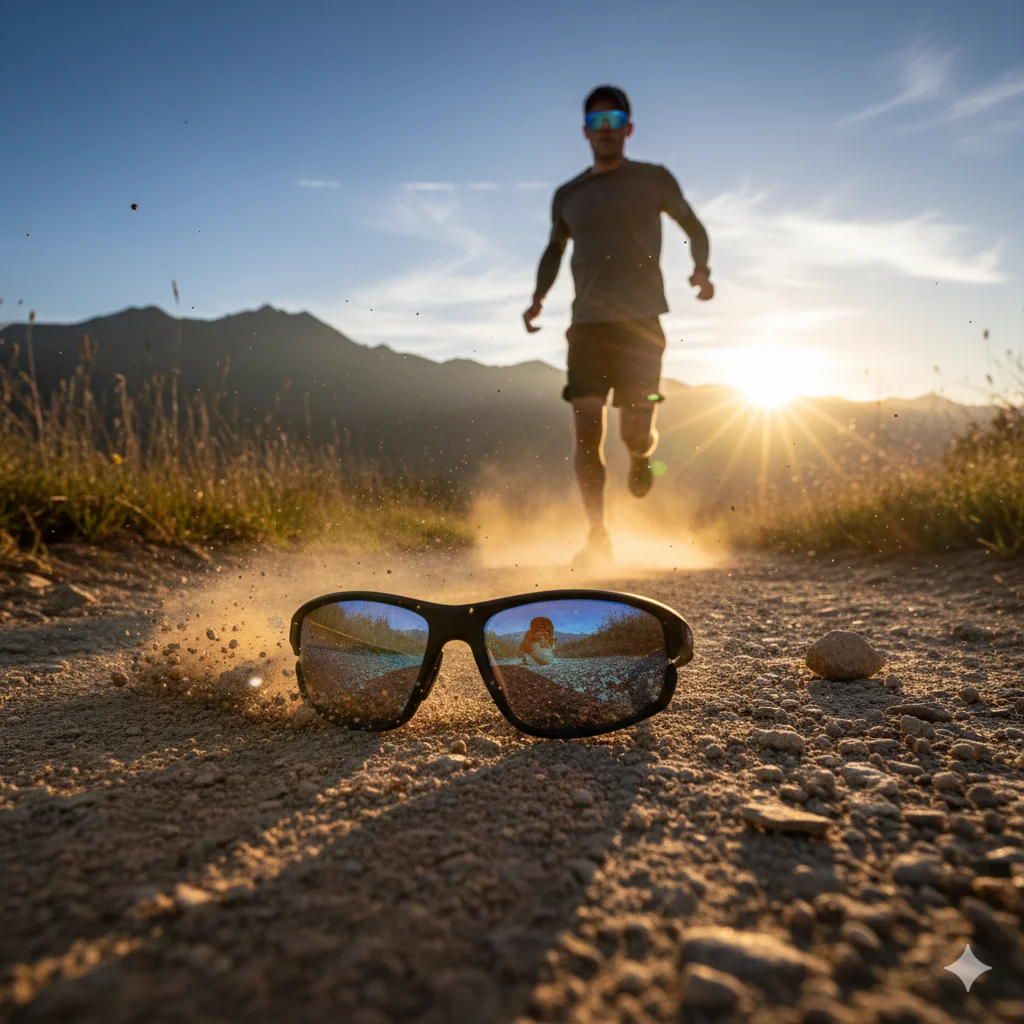
Most running sunglasses fail in boring, predictable ways — they slide when you sweat, fog when you climb, pinch at the temples, dim your vision too much, or bounce just enough to annoy you for an entire run. The best pairs disappear on your face, sharpen what you see, and protect your eyes without asking for attention. That is the only standard this guide uses.
Oakley Radar EV Path — wide FOV, secure fit, road-proven
Smith Motive — coverage, airflow, terrain confidence
goodr OG — real utility, no premium price tag
Rudy Project Propulse — dawn to dusk intelligence
Julbo Spark — sport performance, proportional fit
Tifosi Sanctum — low-drama reliability for long miles
category winners
explained clearly
buying variables
that actually matter
simple goal: buy
the right pair once
time wasted on
generic filler
If you search for the best running sunglasses, you will find plenty of pages that all say roughly the same thing: lightweight frames, UV protection, polarized options, maybe a few product names — done. That is not enough. Real buyers do not need more adjectives. They need help matching the right frame shape, lens type, ventilation pattern, and price point to the way they actually run.
This guide is built for that decision. We are not asking which pair looks coolest in a studio photo. We are asking: which pair gives you the clearest, calmest, least distracting experience at mile 1, mile 8, and mile 18?
For road runners, that usually means glare control, comfort, and a stable fit at tempo pace. For trail runners, it means contrast, eye coverage, debris protection, and enough ventilation to stop lenses from turning into a steam room on climbs. For runners training in mixed weather, photochromic lenses and smart tint selection can matter more than brand prestige.
Just as important — the “best” pair is only one part of a better running setup. If you are building out your kit, our guide to running gear for beginners covers the essentials that make daily training smoother. Refreshing footwear? Our review of the best daily running shoes is a strong next read, and our explainer on how to choose the right running shoes helps you avoid mismatches between your eyewear, stride, and training goals.
✓ No bounce
✓ No cheek slap
✓ Useful contrast
✓ Ventilation that works
✓ Comfort for long runs
To make this article more useful than a generic roundup, it is organized around the actual buyer journey: quick recommendations first, then the test method, then category winners, then the lens and fit education that helps you make a smarter long-term choice. We also cover the terms and concerns that often get missed: VLT, wraparound coverage, interchangeable lenses, photochromic performance, anti-fog behavior, hydrophobic coatings, small-face fit, half-rim versus full-rim stability, and whether polarized lenses are truly better for every run.
Quick Picks: The Best Running Sunglasses for Every Type of Runner
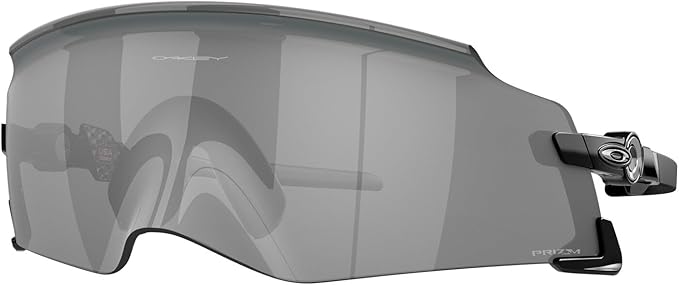
Oakley Radar EV Path
The safest premium recommendation for serious road runners. A big field of view, rock-solid fit, lightweight feel, and polished Prizm optics that make pace work, long runs, and bright open routes dramatically easier on the eyes.
- Wide upper field of view for forward posture
- Secure nose & temple grip without over-clamping
- Outstanding lens quality in bright light
- Premium pricing
- May feel large on narrower faces
- Not the most budget-friendly entry point
Check Price on Amazon
Eligible for Prime shipping

Smith Motive
Purpose-built for runners who spend real time on dirt, roots, switchbacks, and changing light. Excellent wraparound coverage, ChromaPop™ lenses for enhanced contrast, and anti-fog ventilation that keeps up on the hardest climbs.
Check Price on Amazon
Eligible for Prime shipping

goodr OG Running Sunglasses
No-slip, no-bounce, polarized running sunglasses at a price that takes the sting out of losing or replacing a pair. For newer runners, casual runners, or anyone who values practicality over prestige — this is still one of the smartest low-risk buys in the entire category.
Check Price on Amazon
Eligible for Prime shipping
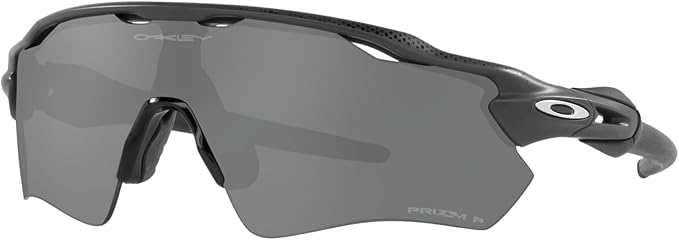
Rudy Project Propulse
If your routes move from open sun to tree cover, or your training often starts at dawn and ends in brighter light — this is the practical answer. Photochromic lenses that adapt intelligently, adjustable nose pads and temples for a truly custom fit, and the kind of versatility that eliminates second-guessing.
Check Price on Amazon
Eligible for Prime shipping

Julbo Spark
Most “best” lists quietly assume an average-to-large face. That leaves smaller-faced runners dealing with slipping, cheek contact, and oversized wrap. The Julbo Spark finally delivers real sport performance in a proportional, compact frame — with an optional Reactiv photochromic lens for variable conditions.
Check Price on Amazon
Eligible for Prime shipping

Tifosi Sanctum
Not every buyer needs the sharpest premium lens or the most aggressive race-day silhouette. Some runners want a comfortable, dependable pair that handles easy runs, long runs, errands, and outdoor life — with zero drama. The Tifosi Sanctum is that pair: well-priced, broadly useful, and endlessly comfortable.
Check Price on Amazon
Eligible for Prime shipping
How We Evaluated Running Sunglasses
The biggest problem with many review pages is not that they recommend bad products — it is that they do not explain the filter they used. Without a filter, every recommendation sounds equally valid. Our framework is simple and transparent. We prioritize six things:
| Factor | What It Means in Practice |
|---|---|
| Fit Security | No slide on sweat, no bouncing at faster cadence, no constant adjustment on climbs or descents. |
| Optical Clarity | Clean vision, low distortion, usable contrast, and a lens tint that helps rather than fights the terrain around you. |
| Coverage | Protection from wind, dust, debris, and side glare without creating blind spots or cheek interference. |
| Ventilation | A frame and lens design that manages fogging well enough for hard efforts, hills, and humid days. |
| Comfort | No temple pain, no nose pressure, and no fatigue during long runs or multi-hour wear. |
| Value | The benefit has to justify the price — whether you spend budget money or go premium. |
We also pay close attention to the details that influence real-world satisfaction more than any spec sheet: nose pad texture, temple arm retention, lens curvature, photochromic responsiveness, anti-scratch durability, hydrophobic behavior in sweat and light rain, and whether the frame works with hats or visors. Runners rarely wear sunglasses in perfect conditions. A great pair should still feel boringly dependable in heat, wind, humidity, dust, drizzle, and changing light.
Category Winners: Detailed Breakdowns
🏆 Best Overall: Oakley Radar EV Path
This is the pick for runners who want one premium pair that can cover the largest number of road-running situations. The oversized lens shape gives you strong peripheral vision and excellent upward field of view — which matters more than people think when posture changes during harder efforts. The frame is light, stable, and proven. For runners who care about performance first, this is still one of the most complete packages in the category.
Who should buy it: Runners doing most of their mileage on roads, bike paths, or open mixed-surface routes who want strong optics, a reliable fit, and a premium feel.
🥾 Best for Technical Trails: Smith Motive
Trail running changes the job description for sunglasses. You need enough coverage to block wind and dust, enough contrast to read texture and contour, and enough airflow to avoid fogging when the trail tilts upward. The Smith Motive is designed around movement and terrain, not just style. It feels purpose-built without becoming overly aggressive.
If trail running is your world, also browse our trail running hub and the trail running nutrition guide so your eyewear, fueling, and route strategy all work together.
💰 Best Budget Option: goodr OG
Budget picks often win by being “surprisingly decent.” goodr wins because it solves the right problem: not every runner wants to spend premium money on every training accessory. Polarized protection, low fuss, decent grip, and a casual frame that transitions from run to errands — it is still one of the most approachable buys in the space.
Best for: Beginner runners, occasional runners, travel pairs, backup pairs, and anyone who values practicality over prestige.
🌤️ Best for Low Light & Changing Weather: Rudy Project Propulse
Low-light running is where many sunglasses become liabilities. If the tint is too dark, contrast collapses, and your feet stop trusting what your eyes report. The Propulse handles mixed light intelligently. In cloud cover, shaded roads, forests, or dawn training, this kind of lens behavior can be more valuable than raw glare reduction.
👤 Best for Small Faces: Julbo Spark
Smaller-faced runners often deal with slipping, cheek contact, oversized wrap, or distorted visual proportions from frames designed for larger heads. The Julbo Spark keeps performance features while offering a friendlier fit profile. If many premium sport frames feel too big on you, this is the category to prioritize over “best overall.”
☀️ Best for All-Day Comfort: Tifosi Sanctum
Some runners simply want a comfortable, dependable pair that handles easy runs, long runs, errands, and outdoor life in general. The Tifosi Sanctum sits in that sweet spot — well-priced, low-drama, broadly useful. It is often the answer for runners who want a single pair with no headaches.
🏁 Best Race-Focused Fit: Shield Styles
If your priority is speed, race posture, and a distraction-free forward view, the best options usually come from large shield or semi-rimless designs with secure contact points and low visual clutter (like the Oakley or Rudy Project shield models). These work best for runners who already know they enjoy the sport-performance look.
Lens Guide: How to Choose the Right Lens for Your Runs
The lens is the heart of the experience. The frame determines comfort and stability, but the lens determines what kind of visual world you run through. This is where many buyers get lost, because terms like polarized, mirrored, photochromic, Prizm, contrast-enhancing, and interchangeable all get thrown around as if they mean the same thing. They do not.
1. Start with UV Protection — Not Tint Darkness
Darker is not safer. A dark lens without proper UV protection is actually worse than a clear lens with proper protection (your pupils dilate behind dark tint, allowing more UV in). Your non-negotiable baseline: 100% UVA/UVB protection (UV400). Everything else comes after that.
2. Understand VLT (Visible Light Transmission)
VLT tells you how much light passes through the lens. Lower VLT = darker lens. High-sun road runs usually feel best with lower VLT (8–18%). Overcast runs, shaded routes, and wooded trails usually need higher VLT (25–60%) or a lighter tint. If you constantly run at dawn or dusk, your ideal lens choice looks very different from someone who trains at midday.
3. Polarized vs. Non-Polarized
Polarized lenses reduce reflected glare — helpful on roads, water-adjacent routes, and open terrain with harsh sun. Non-polarized or contrast-focused lenses may work better for technical terrain where depth cues and surface detail matter more. Polarization is helpful, but it is not automatically the best answer for every runner.
4. Photochromic Lenses
Photochromic lenses darken and lighten as conditions change. They are often the best option for runners who go through forests, clouds, tunnels, or early/late-day light shifts. The upside is convenience. The trade-off is cost and the fact that not every photochromic lens adapts equally fast or equally well.
5. Contrast-Enhancing Tints
Amber, rose, bronze, and some sport-specific tints can improve the separation between shadows, roots, rocks, and surface texture. This is one of the most underrated buying factors, especially if you regularly run on terrain that changes underfoot.
| Condition | Best Lens Type | What to Look For |
|---|---|---|
| Bright road running | Polarized or dark sport lens | Glare control, broad field of view, stable fit |
| Technical trails | Contrast-enhancing non-polarized or adaptable lens | Texture definition, coverage, anti-fog ventilation |
| Dawn or dusk | Light amber, rose, clear, or photochromic | Higher VLT, useful detail, no over-darkening |
| Mixed weather | Photochromic | Adaptation speed, versatility, comfort |
| Casual daily training | Balanced mid-tint lens | Good comfort, enough flexibility for multiple conditions |
Fit Guide: How Running Sunglasses Should Actually Feel
Fit is where good products become bad purchases. A brilliant lens in a bad fit is still a bad running experience. The right pair should feel secure but not tight, protective but not claustrophobic, and stable without demanding your attention every few minutes.
What Good Fit Looks Like
- The frame stays in place during easy running, tempo running, and descents
- The nose pads grip without leaving pressure pain or hot spots
- The temples feel secure but do not squeeze or create headaches
- The lower edge of the lens does not touch your cheeks when you smile
- The frame works with your hat, visor, or headphones if you use them
Common Fit Mistakes Buyers Make
Buying oversized shield frames for a small face: often causes bounce, cheek rub, and poor stability. Choosing lifestyle frames instead of sport frames: they may look good but often lack retention and ventilation. Ignoring bridge fit: if the nose fit is wrong, the entire experience deteriorates from there.
Full-Rim, Half-Rim, or Shield?
Full-rim frames often feel more conventional and durable. Half-rim or semi-rimless designs reduce lower-frame distraction and improve downward visibility. Shield styles maximize coverage and visual continuity. There is no universal winner — your face shape and route type decide the answer.
If your training is aimed at longer races, pairing your eyewear choice with your race-prep tools helps more than people think. Our roundup of the best GPS running watches for marathon beginners can help you build a smarter training setup, and our broader review of the best running shoes is worth reading if your current kit needs a full refresh.
A Helpful Video for Understanding Running Sunglasses
If you want a visual explainer for sport sunglass fit, lens shape, and on-face stability, this video is useful because you can actually see how wrap, coverage, and nose retention work in motion:
The Buying Advice Most Readers Actually Need
If you have read this far, here is the real decision framework:
- Newer to running or budget-conscious? → Get the goodr OG. Smart, simple, low-risk.
- Serious road runner who wants one great pair? → Get the Oakley Radar EV Path. Best all-around road performance.
- Trail runner who needs coverage & contrast? → Get the Smith Motive. Purpose-built for dirt.
- Run in changing light constantly? → Get the Rudy Project Propulse. Photochromic intelligence.
- Smaller face, tired of oversized frames? → Get the Julbo Spark. Finally, a real fit.
- Want all-day comfort for runs and life? → Get the Tifosi Sanctum. Low-drama reliability.
Remember: your route matters more than your self-image. The right choice is the one that fits your actual training life — not a fantasy version of it.
Sunglasses matter more when the rest of your training setup is dialed in too.
Frequently Asked Questions
Are running sunglasses really necessary?
Are polarized lenses always better for running?
What color lens is best for running?
Can I use cycling sunglasses for running?
How much should I spend on running sunglasses?
What is the biggest mistake people make when buying running sunglasses?
References
- American Academy of Ophthalmology — Sunglasses and UV eye protection
- 220 Triathlon — Best running sunglasses guide
- iRunFar — Best running sunglasses
- Runner’s World — Running sunglasses recommendations
- REI Expert Advice — How to choose sunglasses
- OutdoorGearLab — Sunglasses testing insights
- Smith Optics — Product and lens technology information
- Oakley — Sport eyewear product information
- Rudy Project — Sport sunglass technology information
- goodr — Product fit and lens information
