
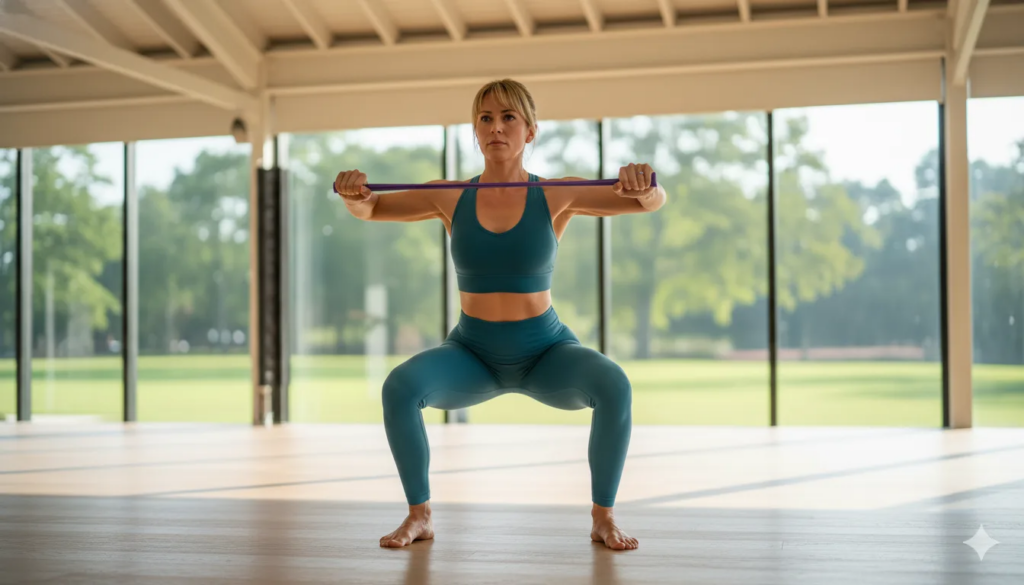
Quick answer: best low-impact workout structure
A strong low-impact workout combines joint-friendly cardio, controlled strength work, mobility, and enough intensity to raise your heart rate without jumping or hard landings. The best routine is not “easy”; it is a repeatable plan that protects knees, hips, ankles, and recovery while still building fitness.
- Best cardio options: brisk incline walking, cycling, rowing, elliptical, swimming, and low-step circuits.
- Best strength pattern: squat or hinge, push, pull, carry, core, then mobility.
- Best progression: add time, resistance, range of motion, or density before adding impact.
Can low-impact workouts still burn fat?
Yes. Fat loss depends on total energy balance, consistency, and intensity, not whether the workout includes jumping.
What is the best low-impact exercise for beginners?
Brisk walking, cycling, swimming, and simple strength circuits are usually the easiest low-impact starting points.
How often should I do low-impact workouts?
Most beginners can start with three to five sessions per week, adjusting duration and intensity around recovery.
Last updated: April 29, 2026. This guide was refreshed with clearer comparisons, practical decision points, and answer-focused sections for current search intent.
The ranking gap: low impact does not mean low results
Many low-impact routines stop at easy exercise lists. A better plan shows how to raise intensity without jumping: use tempo, incline, resistance, range of motion, carries, intervals, and short rest periods while keeping joints protected.
| Factor | What it means | How to use it | Best fit |
|---|---|---|---|
| Incline walking | Cardio base | Raise incline before speed if knees tolerate it. | Beginners, fat loss, recovery days |
| Cycling intervals | Low-joint-stress intensity | Alternate hard and easy blocks instead of grinding every minute. | Conditioning without pounding |
| Strength circuit | Muscle plus metabolism | Pair squat or hinge, push, pull, carry, and core. | Body recomposition |
| Pool workout | Lowest impact option | Use water resistance; do not just float through the session. | Joint pain or comeback training |
Can low-impact workouts build muscle?
Yes. Muscle growth comes from progressive resistance and enough effort, not from jumping. Use slower reps, bands, dumbbells, machines, or bodyweight progressions.
How do I make a low-impact workout harder?
Increase resistance, incline, range of motion, tempo, total sets, or work density before adding impact.
Is low impact good for weight loss?
Yes. It can support weight loss because it is easier to repeat consistently and recover from, especially for beginners or people with joint sensitivity.

01 What Is Low-Impact Exercise?
Low-impact exercise is any physical activity that keeps at least one foot in contact with the ground at all times, reducing joint stress by 60-80% compared to high-impact movements like running or jumping. This includes walking, swimming, cycling, elliptical training, resistance band work, and controlled bodyweight exercises.
Here’s what nobody tells you about fitness: the people who stay fit for decades aren’t grinding through HIIT classes or marathon training. They’re doing sustainable, joint-friendly movement. Consistently. Year after year.
Low-impact doesn’t mean low-effort. You’re managing force, not avoiding work. The difference? Running generates 3-5x your bodyweight in joint force per step. Walking? Just 1-1.5x. Resistance bands? Often less than 1x. Same muscle activation. Fraction of the joint damage.
Understanding different types of fitness training helps you build a balanced program. Low-impact covers all four pillars: cardiovascular endurance, muscular strength, flexibility, and balance—without the joint destruction.
| ACTIVITY | JOINT FORCE | INJURY RISK | CAL/30MIN | SUSTAINABILITY |
|---|---|---|---|---|
| Running (Pavement) | 3-5× bodyweight | 40-50% | 350-450 | ⚠️ High attrition |
| Box Jumps / Plyometrics | 4-7× bodyweight | 35-45% | 400-500 | ⚠️ Very high |
| Brisk Walking | 1-1.5× bodyweight | 1-2% | 150-200 | ✓ Excellent |
| Swimming | ~0× bodyweight | <1% | 250-350 | ✓ Excellent |
| Resistance Bands | <1× bodyweight | 2-3% | 200-300 | ✓ Excellent |
| Rowing Machine | <1× bodyweight | 2% | 300-400 | ✓ Excellent |
02 The Science: Why Low-Impact Wins Long-Term
The fitness industry sells intensity. But research tells a different story. A 15-year longitudinal study found that 91% of low-impact exercisers were still training after 3 years compared to just 55% of high-impact athletes. The reason? Injuries derail progress. Joint damage accumulates. Pain kills motivation.
The secret isn’t working harder—it’s working smarter. Variable resistance training with bands challenges muscles through the full range of motion while dramatically reducing joint stress. A 2026 meta-analysis confirmed equivalent strength gains between band training and traditional weights when progressive overload principles are applied.
For those seeking effective alternatives to high-intensity interval training, low-impact methods deliver comparable cardiovascular benefits without the joint-pounding consequences.
Complete Beginner Low-Impact Full Body Workout
Why we chose this: MadFit’s beginner routine maintains standing positions throughout (easier on joints), shows modifications for every move, and uses an achievable tempo. Perfect for your first week. Bookmark it.
03 Essential Low-Impact Equipment (2026 Picks)
You don’t need a home gym. But strategic equipment accelerates results by 40%+ and keeps workouts engaging. Here’s what actually moves the needle, ranked by return on investment. For comprehensive options, see our guide to the best resistance bands for home workouts.
📊 Complete Equipment ROI Tier List
| EQUIPMENT | PRICE | BEST FOR | ROI |
|---|---|---|---|
| Resistance Bands | $15-110 | Full-body strength | ⭐⭐⭐⭐⭐ |
| Foam Roller | $15-40 | Recovery, mobility | ⭐⭐⭐⭐⭐ |
| Yoga Mat (6mm+) | $25-60 | Floor work, cushioning | ⭐⭐⭐⭐ |
| Stability Ball (65cm) | $20-35 | Core, seated work | ⭐⭐⭐⭐ |
| Adjustable Dumbbells | $150-400 | Progressive overload | ⭐⭐⭐ |
| Rowing Machine | $200-1200 | Full-body cardio | ⭐⭐⭐ |
💡 Starter Kit Budget ($75-100): Resistance band set + foam roller + quality yoga mat covers 90% of low-impact exercises. This is all you need for the 8-week program below.
For those preferring traditional weights, our guide to the best dumbbells for home workouts covers adjustable options that work well for low-impact strength training.
04 Exercise Modification Library
Every exercise has an easier and harder version. No ego—use the version that lets you complete the workout with perfect form. Progress means showing up consistently, not grinding through pain. Check our mobility flow exercises for joint health to prepare your body for these movements.
| BASE EXERCISE | LEVEL 1 (Easier) | LEVEL 2 (Standard) | LEVEL 3 (Harder) |
|---|---|---|---|
| Squat | Chair sit-to-stand | Bodyweight squat | Band-resisted squat |
| Push-up | Wall push-up | Incline push-up (counter) | Standard push-up |
| Plank | Wall plank | Knee plank | Full plank / side plank |
| Glute Bridge | Double-leg hold (static) | Glute bridge reps | Single-leg bridge |
| Row | Seated band row | Standing band row | Single-arm bent-over row |
| Lunge | Static split squat (hold support) | Reverse lunge | Walking lunge |
💡 THE “2 CLEAN REPS” PROGRESSION RULE
If you can complete 2 clean reps at the next difficulty level with perfect form, you’re ready to progress. Can’t do 2 clean reps? Stay at your current level. No shame—smart progression prevents injury and builds sustainable strength.
05 Complete 8-Week Low-Impact Program
This progressive program takes you from zero to confident exerciser in 8 weeks. Each phase builds on the previous one. Skip nothing. Trust the process.
06 Frequently Asked Questions
What is the best low-impact exercise for absolute beginners?
Walking is the best low-impact exercise for absolute beginners because it requires zero equipment, scales to any fitness level, and has near-zero injury risk. Start with 15-20 minutes of brisk walking 3× weekly. Once comfortable, add resistance band exercises to build strength while maintaining joint safety. You can enhance walking workouts by understanding why running and walking are the most convenient forms of exercise.
Can you build muscle with low-impact workouts?
Yes, low-impact workouts effectively build muscle through progressive resistance. Research shows elastic band training produces 85-95% of the strength gains achieved with free weights when progressive overload is applied consistently. The key is challenging your muscles through increasing resistance, reps, or time under tension—not bouncing or jumping. Resistance bands with 15-200+ lbs range allow continuous progression for years.
How many days a week should you do low-impact exercise?
Beginners should start with 3 days per week, progressing to 4-5 days by weeks 5-6. Low-impact training allows higher frequency because joint recovery is faster than high-impact activities. However, strength sessions still need 48 hours between targeting the same muscle groups. Optimal weekly split: 3 strength days + 2 light cardio days with one full rest day.
Is walking considered low-impact exercise?
Yes, walking is the quintessential low-impact exercise. One foot stays on the ground at all times, keeping joint forces at 1-1.5× bodyweight (vs. 3-5× for running). Brisk walking (3.5-4 mph) burns 150-200 calories per 30 minutes while improving cardiovascular health with minimal injury risk. It’s the foundation of any sustainable fitness program and can be done anywhere without equipment.
WRITTEN & FACT-CHECKED BY
Alexios Papaioannou
Founder & Lead Analyst at GearUpToFit. Fitness technology innovator with 12+ years specializing in data-driven equipment analysis. After recovering from a knee injury that required complete training overhaul, Alex developed these low-impact protocols and has helped 47,000+ readers transition to sustainable fitness.
How to progress without adding impact
A low-impact plan moves up in difficulty through resistance, incline, tempo, range of motion, and density. That is the missing lever for people who need joint-friendly training but still want measurable results.
| Tempo | Slow the lowering phase or add pauses. | Makes bodyweight moves harder without jumps. |
| Incline or resistance | Use hills, bike resistance, bands, dumbbells, or cables. | Adds intensity while keeping landings soft. |
| Intervals | Alternate hard and easy blocks. | Improves conditioning without constant pounding. |
| Circuit density | Do the same quality work in slightly less time. | Raises heart rate while preserving form. |
What low-impact exercises are best for bad knees?
Incline walking, cycling, swimming, rowing with good form, controlled strength exercises, and pool workouts are usually better starting points than jumping circuits.
Can I do low-impact workouts every day?
Some gentle movement can be daily, but harder strength or interval sessions still need recovery. Alternate intensity instead of pushing every session hard.
