
If the number on your scale has ever lied to you — welcome. Your bathroom scale can’t tell a pound of muscle from a pound of fat. Your body fat percentage can. It’s the single most useful metric for understanding your metabolic health, training progress, and long-term disease risk.
According to 2026 CDC data, roughly 36% of U.S. adults carry an unhealthy amount of body fat. The first step to changing your number is knowing it.
Key Takeaways

🔑 The 60-Second Summary
- Formula: body fat % = (fat mass ÷ total weight) × 100
- Gold standard: DEXA scan (±1–2%)
- Best free method: US Navy tape-measure (used below)
- Healthy ranges: Men 8–22% · Women 21–35%
- Visceral fat — around the organs — is the dangerous kind
- How to reduce it: modest deficit + strength training + protein + sleep
Free Body Fat Calculator (US Navy Method)
Validated against DEXA within ±3% for most adults. All you need: a flexible tape measure and 60 seconds.
Body Fat Percentage Calculator
Free · Private · No signup · Instant results
Your body fat percentage
Estimate only. Consult a healthcare professional for a comprehensive evaluation.
What Is Body Fat Percentage?

Body fat percentage is the share of your total body mass made up of fat tissue. The rest — muscle, bone, water, organs, and connective tissue — is called lean mass. Unlike weight or BMI, body fat percentage tells you what your body is made of, not just how much gravity is pulling on it.
Why Your Body Actually Needs Some Fat
- Energy reserve — long-term fuel storage.
- Thermoregulation & cushioning — insulation and organ protection.
- Hormone production — leptin, estrogen, adiponectin.
- Nutrient absorption — fat-soluble vitamins A, D, E, K.
- Brain function — ~60% of brain dry weight is fat.
The problem isn’t fat — it’s too much of it, especially visceral fat wrapped around abdominal organs, which drives heart disease, type 2 diabetes, and several cancers.
Why Body Fat % Beats the Scale
- Real risk assessment — body fat % correlates with cardiometabolic disease better than BMI.
- Accurate progress tracking — the scale stalls while composition improves.
- Smarter goals — “drop 4% body fat” beats “lose 10 pounds.”
The 6 Methods Compared
| Method | Accuracy | Cost | Convenience | Best For |
|---|---|---|---|---|
| DEXA Scan | ±1–2% | $75–$200 | Clinic visit | Gold-standard accuracy |
| Hydrostatic Weighing | ±2% | $50–$150 | Lab only | Research settings |
| BodPod | ±2–3% | $50–$100 | Clinic visit | Fast, non-invasive |
| Skinfold Calipers | ±3–5% | $10–$50 | At home | Regular tracking |
| US Navy Tape | ±3–4% | Free | 60 sec at home | Most people |
| BIA Smart Scale | ±4–8% | $30–$300 | Daily at home | Tracking trends |
1. BMI — Quick, but Limited
BMI = weight (kg) ÷ height (m)². Useful for population screening, but treats a lean linebacker and a sedentary office worker as identical at the same weight and height. BMI is not a body-fat measurement — only a weight-class estimate.
2. Skinfold Calipers
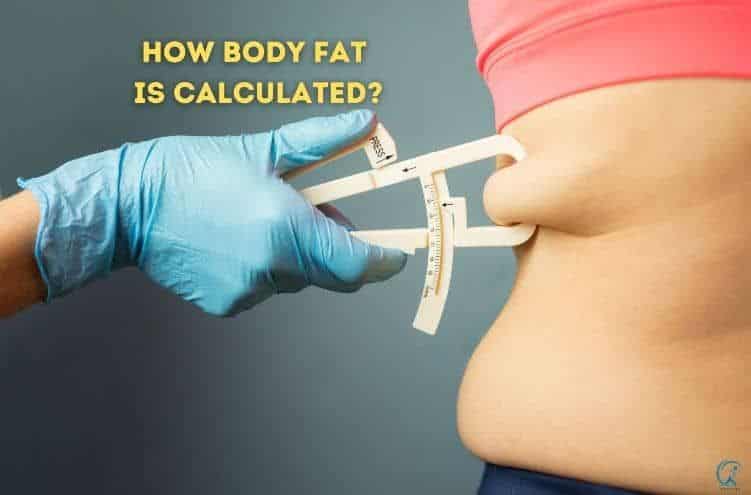
Calipers pinch standardized sites (triceps, suprailiac, thigh, subscapular). With a trained tester using Jackson-Pollock or Durnin-Womersley equations, accuracy is excellent.
3. Bioelectrical Impedance (BIA)
Smart scales (Withings, Renpho, Garmin Index) and clinical InBody/Omron units send a harmless current and estimate fat-free mass from resistance. For reliable readings: measure in the morning, hydrated but 3+ hours post-meal, avoid caffeine/alcohol/intense exercise the day before.
4. DEXA Scan
The clinical gold standard. Two low-dose X-ray beams distinguish bone, lean tissue, and fat — with regional breakdowns. Radiation ≈ one cross-country flight.
5. Hydrostatic (Underwater) Weighing
Extremely accurate via Archimedes’ principle — but increasingly rare as labs switch to DEXA and BodPod.
6. US Navy Tape Method
Only needs a flexible tape measure. Uses neck, waist, and (for women) hip circumferences plus height. Cost-effective, private, and surprisingly robust with good technique — it’s the method in the calculator above.
Healthy Ranges (By Age & Gender)
| Men (ACE Guidelines) | |
|---|---|
| 18–30 | 8% – 19% |
| 31–50 | 9% – 21% |
| 51–70 | 10% – 22% |
| Over 70 | 11% – 23% |
| Women (ACE Guidelines) | |
|---|---|
| 18–30 | 21% – 33% |
| 31–50 | 24% – 36% |
| 51–70 | 25% – 37% |
| Over 70 | 26% – 38% |
Health Risks of Excess Body Fat
- Cardiovascular disease — hypertension, heart attack, stroke.
- Type 2 diabetes — driven by visceral insulin resistance.
- Certain cancers — postmenopausal breast, colorectal, pancreatic, endometrial.
- Metabolic syndrome — high BP, blood sugar, triglycerides, low HDL.
- Osteoarthritis — especially knees and hips.
- Obstructive sleep apnea — neck fat narrows the airway.
- NAFLD — now the most common chronic liver condition in the U.S.
Visceral vs. Subcutaneous Fat
A waist-to-height ratio over 0.5 is a quick visceral-fat warning. For targeted strategies, see How to Lose Belly Fat.
How to Reduce Body Fat Safely
1. Build a Modest Calorie Deficit
- 10–20% daily deficit — aggressive cuts cost muscle and hormones.
- 0.7–1.0 g protein per pound of goal weight to preserve muscle.
- Whole foods first — vegetables, fruit, legumes, lean protein, whole grains.
- Cap ultra-processed foods and sugary drinks — the easiest wins.
Related: Meal Planning for Weight Loss · Balanced Whole-Foods Diet
2. Lift Weights
- Strength train 2–4×/week to preserve muscle during a deficit.
- Zone 2 cardio / brisk walks — 150+ min/week.
- 1–2 HIIT sessions for insulin sensitivity.
Related: Strength Training for Beginners · Ultimate HIIT Guide
3. Hydrate, Sleep, De-stress
- Hydration — pale-yellow urine target. See Importance of Hydration.
- Sleep 7+ hours — less can double muscle loss during a deficit. See Sleep and Fitness.
- Stress — chronic cortisol promotes visceral fat. Add walking, breathwork, or meditation.
4. Be Consistent, Not Perfect
Target 1–2% body fat reduction per month. Track trends, adjust every 4–6 weeks. Learn How to Track Your Fitness Progress.
Myths vs. Reality
Frequently Asked Questions
How accurate are home body fat scales?
Smart scales using BIA are typically within ±4–8% of lab measurements — best for trends, not exact numbers. Use DEXA for precision.
Is BMI a reliable indicator of body fat?
Not really. BMI ignores muscle, bone density, and fat distribution. Athletes often score “overweight” despite low body fat.
What’s the most accurate method?
DEXA scans at ±1–2%. For home tracking, the US Navy method or a quality BIA scale are most practical.
Can I target fat loss in specific areas?
No — spot reduction is a myth. Genetics decide where fat is lost first.
How often should I measure?
Every 4–6 weeks. Daily readings add noise, not signal.
What’s a healthy body fat % for women?
Generally 21–35% depending on age. Below 15% can cause hormonal and bone issues.
What’s a healthy body fat % for men?
Typically 8–22%. Below 5% is the essential-fat minimum.
How fast can I safely lose body fat?
About 1–2% per month is sustainable. Faster rates cost muscle and disrupt hormones.
Does body fat change with age?
Yes — metabolism slows ~1–2% per decade after 30. Strength training slows this dramatically.
Is this guide updated for 2026?
Yes — reviewed May 5, 2026, with current CDC data, ACE guidelines, and best-practice research.
Conclusion
Understanding how body fat is calculated — and where you fall — is one of the most useful things you can do for your long-term health. Pick a method, retest every 4–6 weeks, and focus on the habits that actually move the needle: calorie-aware nutrition, strength training, sleep, hydration, and stress management.
Disclaimer: Educational only. Not medical advice. Consult a qualified professional before significant dietary or exercise changes.
